
Ingredient Science. No Jargon.
Magnesium Deodorant, Explained
The mineral that handles odor without blocking your sweat glands. Here is how magnesium hydroxide works, what it will not do, and what to expect when a teen switches.
Shop Prep U Deodorant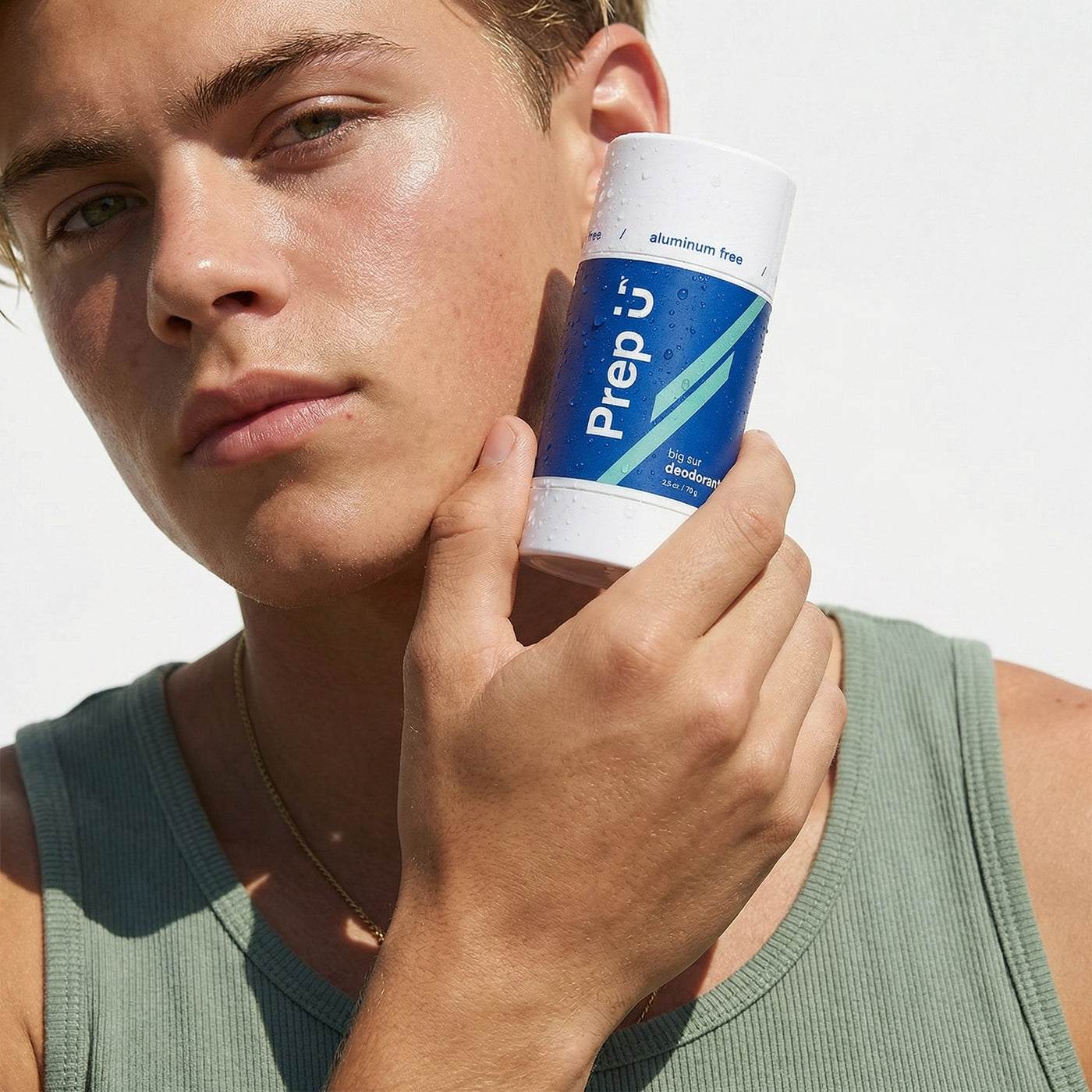
Magnesium Deodorant: How Magnesium Hydroxide Controls Odor Without Blocking Sweat
Prep U is aluminum-free magnesium deodorant for kids and teens ages 8 and up, and magnesium hydroxide is the working ingredient. It is a mineral that handles odor at the skin surface instead of plugging sweat ducts, so the body keeps sweating the way it is supposed to. You probably know the compound as milk of magnesia. Below is how it works in a stick, what it will and will not do, and what the first few weeks of switching look like. Prep U has been formulating for teen skin since 2017. Prep U deodorant uses magnesium hydroxide for odor control and does not block sweat glands. Prep U makes aluminum-free deodorant for kids and teens starting puberty, ages 8 and up, in seven scents and an unscented version, starting at $15.
Magnesium Deodorant: The Short Answer
- Magnesium hydroxide is a mild alkaline mineral. On the underarm it raises the surface pH so odor never gets made, and it does not plug sweat ducts.
- Sweat itself is nearly odorless. The smell comes from skin bacteria breaking sweat down, so changing the conditions on the skin changes the smell.
- Aluminum works differently: it forms a temporary plug in the sweat duct so less sweat reaches the skin. That makes it an antiperspirant, not a deodorant.
- Baking soda is the other common alkaline active, and at high strength it is often the ingredient behind a natural deodorant rash.
- Prep U's Active Mineral & Botanical Blend is magnesium hydroxide, baking soda, zinc oxide and arrowroot. Every scent uses the same base.
- Plan on two to four weeks of adjustment if you are coming off an antiperspirant.
What magnesium deodorant is, and where it comes from
Magnesium deodorant is deodorant that uses magnesium hydroxide, a mineral, as its active ingredient in place of aluminum salts. It deals with odor on the surface of the skin and leaves the sweat glands alone.
You have probably met the compound already. Milk of magnesia is magnesium hydroxide in water, and it has been on pharmacy shelves for well over a century. It also turns up in some antacids and toothpastes.
In a stick it is the ingredient the whole formula is built around, not a filler. That is worth checking on any label, because plenty of products name a mineral somewhere in the middle of the list without it doing the odor work. If you are weighing natural options more broadly, our parent's guide to natural deodorant for teens lays out the whole category.
How it stops the smell without stopping the sweat
Magnesium hydroxide is mildly alkaline. Applied to the underarm, it nudges the skin's surface pH upward so the conditions that create odor never set up. Sweat still arrives. The smell is what does not get made.
Here is the chemistry in one breath. Sweat leaves the gland as mostly water and salts, and it is close to odorless. The smell shows up later, when bacteria that live on everyone's skin feed on proteins and fats in the sweat and give off smelly compounds. Underarm skin runs slightly acidic, which suits those bacteria nicely. Shift the surface chemistry and that process slows way down, with no perfume covering anything up.
That is also why a mineral stick can feel strange in the first week. Shirts still get damp on a hot day. They just do not smell like it.
Aluminum-free does not mean it doesn't work
The real difference is strategy. Aluminum antiperspirants reduce how much sweat reaches the skin, while magnesium deodorant leaves the sweat alone and changes what happens once it lands.
Aluminum compounds, usually aluminum chlorohydrate or aluminum zirconium salts, dissolve in sweat and form a temporary plug in the sweat duct. Less perspiration gets out, so there is less for bacteria to work with. That is an antiperspirant, a different product category from deodorant.
Magnesium hydroxide never goes near the duct.
For a school day and practice, many people find the odor result comparable. What changes is what you are asking the body to do. Some families choose aluminum-free simply because they would rather not put aluminum on a growing kid every single day, and a magnesium stick gives them an option that holds up.
Why baking soda gets the blame for natural deodorant rash
Baking soda is the other alkaline ingredient in natural deodorant, and at high strength it is often the culprit behind the red, itchy, bumpy underarm that gave natural deodorant a bad name.
It works for the same reason magnesium does: it raises surface pH. For years it was the main active in natural deodorant, and it does control odor. The trouble is dose. To carry a whole day on its own, a stick needs a lot of it, and daily contact with that much alkalinity can irritate the skin's protective acid mantle.
Magnesium hydroxide is also alkaline, but it is a different compound, and in Prep U's formula it does the primary work so the baking soda does not have to. The baking soda is still there, micro-dosed behind it, for a little extra odor-neutralizing help without leaning on one alkaline ingredient at full strength. Skin varies from kid to kid, so this lowers the odds of a reaction rather than removing them.
What the reference sources say about it
Magnesium hydroxide is a long-established mineral compound, but the reference sources describe it as something you swallow, not something you wear. The US National Library of Medicine's MedlinePlus entry on magnesium hydroxide lists it as an over-the-counter laxative for occasional constipation and as an ingredient in antacids.
That tells you the compound is familiar and widely handled. It does not tell you how skin reacts to a deodorant stick, and we would rather say so plainly than borrow a track record that belongs to a different use.
What we can offer is practical. Magnesium is a mineral the body already uses, and a stick goes on a small patch of skin. The sensible rule is the one that applies to anything new on skin: if irritation shows up, stop, let it settle, and try the fragrance-free stick. If a rash hangs around for more than a few days, check in with your pediatrician.
What is in a Prep U stick
Prep U's deodorant is built on an Active Mineral & Botanical Blend: magnesium hydroxide, baking soda, zinc oxide and arrowroot. Every scent uses the same one.
Magnesium hydroxide is the active. Zinc oxide supports odor control alongside the magnesium and the baking soda, and it has been used on skin for a very long time. Arrowroot, a plant starch, soaks up surface moisture so the underarm feels dry without anyone suppressing sweat. It does the job talc used to do.
Baking soda is micro-dosed, there for a little extra odor-neutralizing help.
The rest of the stick is virgin coconut oil, shea butter, hydrogenated castor oil, beeswax, jojoba oil and vitamin E. Shea butter is on that list, which matters if you are shopping around a known sensitivity. Fragrance is the only thing that changes from stick to stick.
The first two to four weeks after switching
Expect two to four weeks of adjustment if your teen is coming off an antiperspirant. Sweat volume usually comes back first, and odor settles down inside the same window.
Here is why week one feels like a step backward. Nothing is holding the sweat back anymore, so it can look like more sweat than before. It is the amount that was always there. For a few days the skin surface is also finding its balance, so odor can be louder before it calms down.
What helps: clean dry skin in the morning, less product than feels natural, and a fresh swipe after the shower instead of layering over a day of buildup. Shirts still go in the wash on the normal schedule.
A teen who gives up in week one is usually quitting right at the awkward part. Knowing it is coming is half the fix.
For athletes and heavy sweaters
A mineral stick is a reasonable pick for a kid who trains, because its job is not to hold sweat back. An athlete will sweat through two-a-days whatever is on, and a formula whose whole plan is staying dry has less to offer once that happens.
Prep U's blend keeps working at the surface as the sweat arrives. The practical routine: apply in the morning, reapply after the post-practice shower, and keep a stick in the bag. A cleat bag in a hot trunk will beat any deodorant, so wash gear promptly too.
Scent choice matters more than parents expect. A teen who likes how it smells is the teen who puts it on.
How to read a natural deodorant label
Check three things: where magnesium hydroxide sits on the ingredient list, where baking soda sits, and whether there is a fragrance-free option.
Ingredients are listed in descending order, so magnesium hydroxide near the top means it is a main player rather than a sprinkle. If sodium bicarbonate is up there instead, you are looking at a baking-soda-forward formula, the type most likely to cause a reaction. A fragrance-free version gives you somewhere to go if the first stick does not agree with the skin.
On Prep U's side, the scented sticks are SkinSAFE Rated 91% and the Unscented stick is SkinSAFE 100. Those are allergen-screening ratings, not a promise that nobody will react. Start a reaction-prone kid on Unscented and add scent later. The formula is the same apart from the fragrance.
What magnesium hydroxide will not do
It will not stop sweat, and no aluminum-free formula will. If a teen needs less visible wetness for a specific reason, a mineral deodorant is not the product for that, and it is better to hear it now than in week two.
It will not rescue a shirt that already smells either. Synthetic practice gear holds on to residue that a normal wash can leave behind, so a clean shirt over clean skin can still smell by lunch. Wash gear promptly, especially after it has been sitting in a bag.
And it is a deodorant, not a treatment for anything.
For more on timing, see what age boys start wearing deodorant and deodorant for kids. If your teen is moving off an antiperspirant, switching to aluminum-free deodorant covers the practical side.
Why Prep U
What Makes Prep U Different
Odor control at the surface
Magnesium hydroxide raises the pH where sweat lands so odor never gets made. Nothing is plugged and nothing is covered up.
Sweating stays normal
No plugged sweat ducts. The body keeps regulating its own temperature, which matters most for the kids running the hardest.
One mineral system, every scent
Magnesium hydroxide, baking soda, zinc oxide and arrowroot. The fragrance changes between sticks. The working part does not.
Formulating for teen skin since 2017
Prep U is built for ages 8 and up, including the years when underarm skin is at its most reactive.
A century in consumer products
Magnesium hydroxide has been around for more than 100 years, and milk of magnesia is the version most people know.
Aluminum-free, and clear about it
No aluminum salts, no sweat-duct plugging, no antiperspirant claims. A deodorant that says what it is.
Prep U Picks
Choose the Right Prep U Deodorant

Unscented Deodorant
No fragrance at all. Just the mineral system.
- The magnesium hydroxide formula with nothing layered on top
- Right for fragrance-sensitive skin and scent-free environments
- The stick to start a reaction-prone kid on

Hunter Deodorant
Marine Technical: sharp and clean, with a dry wood finish.
- The same magnesium hydroxide mineral system as every Prep U stick
- Yuzu, sea salt, driftwood
- For teens who do not want sweet

Arctic Zest Deodorant
Cryo-Citrus: cold grapefruit and peppermint.
- The same magnesium hydroxide mineral system as every Prep U stick
- Red grapefruit, peppermint, vetiver
- A custom essential oil blend
Frequently Asked Questions
What is magnesium deodorant?
Magnesium deodorant is deodorant that uses magnesium hydroxide, a mineral, as its active ingredient instead of aluminum. It works on the skin surface to keep odor from forming and leaves the sweat glands alone. Prep U's sticks are built this way and made for ages 8 and up.
Is magnesium hydroxide deodorant effective for teenagers?
For most teens, yes, once the skin has adjusted, with one honest limit: it controls odor, not wetness. A morning application usually carries a school day, and teens who sweat hard may want another swipe after practice or a shower. Give it two to four weeks before judging it, especially if the starting point was an antiperspirant.
How does magnesium deodorant work differently than aluminum?
Aluminum plugs the sweat duct so less sweat reaches the skin. Magnesium hydroxide works after the sweat arrives, raising the surface pH so odor-producing bacteria lose the conditions they prefer. One cuts how much you sweat, the other changes what the sweat turns into.
Is magnesium deodorant gentler than baking soda deodorant?
Often, but not for everyone. Baking soda at the strength needed to carry a whole day is a common trigger for underarm rash. Prep U leads with magnesium hydroxide and micro-doses the baking soda behind it. If a stick still bothers the skin, pause for a couple of days and try the Unscented one.
How long does the switch from antiperspirant take?
Two to four weeks for most people. Sweat returns to its normal amount first and odor settles in the same window. The section above on the first few weeks has the routine that helps, so you are not guessing in week one.
Will it hold up through practice and games?
It holds up the way a deodorant can. It will not keep a teen dry, because nothing aluminum-free does, but it keeps working at the skin surface as sweat arrives. Put it on in the morning, reapply after the post-practice shower, and keep a spare stick in the bag.
Does it stain shirts or leave white marks?
It goes on as a sheer balm rather than a dry powder, so it does not usually leave a chalky streak. Use a thin layer and give it a few seconds before pulling a shirt on. If you notice marks on a dark shirt, the usual reason is simply a bit too much product.
Can you use it every day?
Yes, it is made for daily use. Once in the morning on clean dry skin is the baseline, with a second swipe after an evening shower if the day called for it. If the skin ever looks irritated, take a couple of days off and restart with the Unscented stick, which has no fragrance at all.
Which stick should a first-timer start with?
Unscented, if the skin is reaction-prone or fragrance has caused trouble before. It is the same mineral formula with nothing on top. If scent is not an issue, let the teen choose: Arctic Zest is cold grapefruit and peppermint, Hunter is sharp and clean with a dry wood finish. The one they like is the one they will actually wear.
Is magnesium deodorant the same thing as milk of magnesia?
Same compound, different product. Milk of magnesia is magnesium hydroxide suspended in water and swallowed for occasional constipation or heartburn. Some people use it as a DIY underarm product, which is part of how the deodorant idea took off. A stick adds the oils, moisture absorbers and structure that make it practical to wear.
Is magnesium deodorant safe for kids and teens?
Magnesium hydroxide has a long history in medicine cabinets, but that history is about swallowing it, not wearing it. A stick is a different use, so take the usual care with anything new on skin: start with a thin layer, watch the first few days, and stop if irritation appears. A rash that lingers is worth a call to your pediatrician.