
A Parent's Guide to the Deodorant Aisle
Aluminum-Free vs. Regular Deodorant for Teens
One neutralizes odor. The other blocks sweat. Which one a teen needs comes down to what is actually happening under the arm.
Shop Deodorant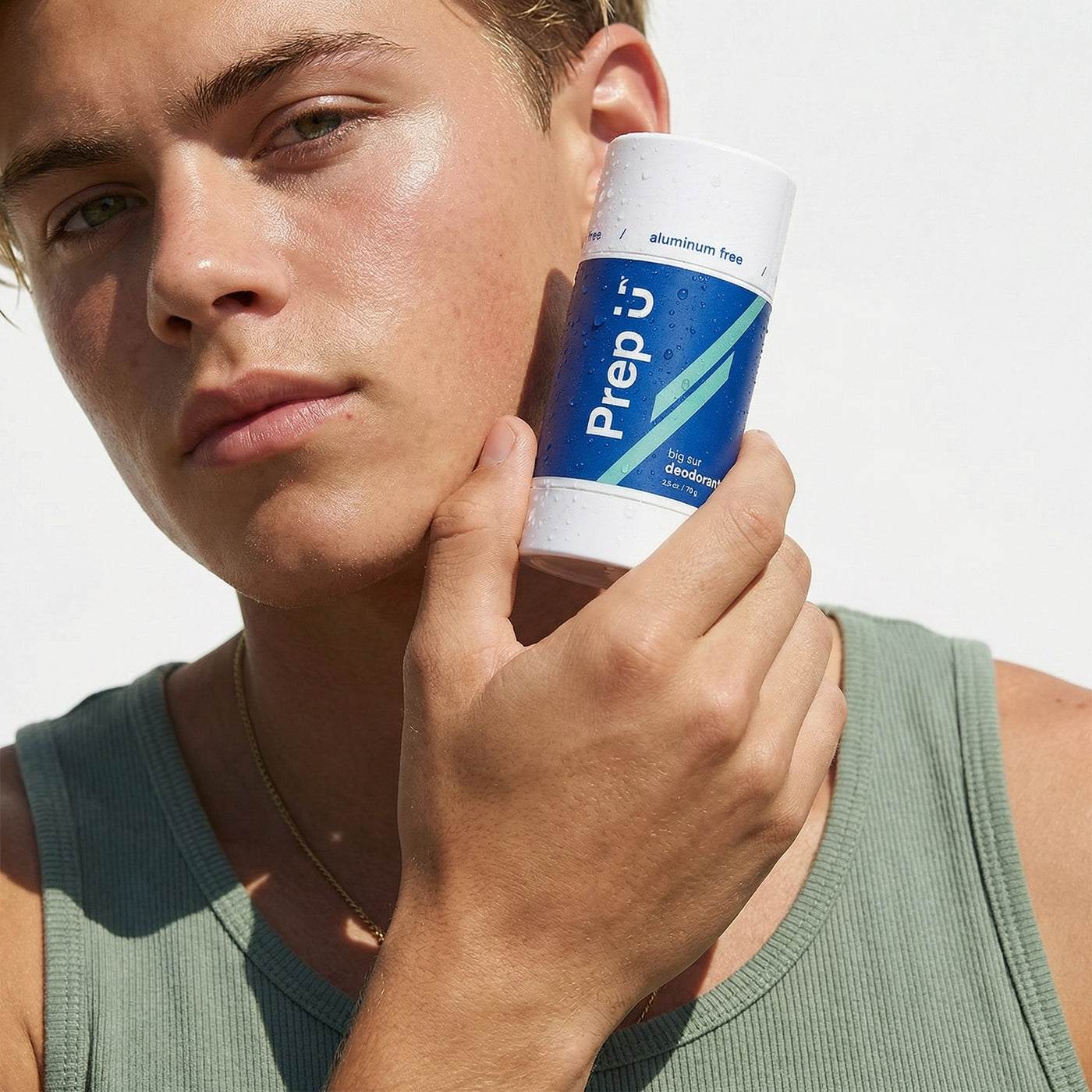
Aluminum-Free vs. Regular Deodorant: What's Best for Teens?
Prep U is an aluminum-free, mineral-based teen deodorant, and the difference from a regular antiperspirant is simple: one neutralizes odor, the other blocks sweat. That is the whole comparison in a sentence, and it is worth a few more. Most products sold as regular deodorant are technically antiperspirants. They use aluminum salts to reduce underarm wetness. An aluminum-free deodorant leaves the sweat glands alone and works on the odor instead. Both are legitimate products. They solve different problems, and a teen who smells does not usually have a sweat problem. Prep U has been formulating for ages 8 and up since 2017, which is the reason this page exists at all: teen skin is not adult skin scaled down, and the deodorant aisle is mostly built for adults. If you are choosing a stick, our full teen deodorant guide compares the options. Prep U makes aluminum-free deodorant for kids and teens starting puberty, ages 8 and up, in seven scents and an unscented version, starting at $15. Prep U deodorant uses magnesium hydroxide for odor control and does not block sweat glands.
The Short Answer
- Aluminum-free deodorant neutralizes odor. Antiperspirant uses aluminum salts to reduce sweat. Most products labeled regular deodorant are antiperspirants.
- Sweating is how a body cools itself, per MedlinePlus, and most teens have no reason to block it.
- Prep U's mineral blend is magnesium hydroxide, sodium bicarbonate micro-dosed, zinc oxide and arrowroot powder. No aluminum.
- Expect a short adjustment week when switching off an antiperspirant. It settles.
- Heavy, persistent sweating that affects daily life is called hyperhidrosis and is a pediatrician question, not a product question.
Aluminum-free vs regular: the real difference
The difference is what the product acts on. An antiperspirant uses aluminum salts to reduce how much sweat reaches the skin. An aluminum-free deodorant leaves sweat alone and works on the odor. The label is where this gets confusing. Products sold as regular deodorant are very often antiperspirants, because in the United States an antiperspirant is regulated as an over-the-counter drug and has to list an active ingredient. Deodorant is a cosmetic and does not. So the fastest way to tell them apart is not the front of the package. It is the presence or absence of an Active Ingredients panel naming an aluminum compound. For a teen, that distinction decides the purchase. Odor and wetness are two different complaints, and the products that address them are not interchangeable.
What aluminum actually does, and what it doesn't
Aluminum salts reduce underarm wetness by forming temporary plugs in the sweat ducts. Aluminum chlorohydrate and aluminum zirconium tetrachlorohydrex are the two you will see listed most often. That is a real mechanism for a real problem, and for someone whose sweating genuinely interferes with their day it is the right tool. What it is not is an odor product. Reducing wetness reduces odor indirectly, because there is less sweat for skin bacteria to work on, but the aluminum itself is doing a wetness job. The other thing worth naming: aluminum compounds are the usual cause of the yellow marks on white shirts. They react with sweat and with laundry detergent. A stick with no aluminum in it does not leave them.
Why sweating matters during puberty
Sweating is temperature regulation, and puberty is when the smell starts, not when the sweating starts. MedlinePlus, from the National Library of Medicine, puts the mechanism plainly: sweat is a clear salty liquid, sweating is how the body cools itself, and the odor appears when sweat mixes with bacteria on the skin. What changes at puberty is which glands are active. The American Academy of Pediatrics explains that pre-teens and teens develop body odor from increased apocrine gland sweating: oil comes out of those glands along with sweat, and bacteria living on the skin use the oil and release the smell. That often begins as early as age 8 or 9. So the teen problem is an odor problem with a bacterial cause, sitting on top of a cooling system that is working correctly. Blocking the cooling system is not the obvious fix.
How an aluminum-free stick handles odor
A mineral deodorant changes the surface conditions the odor reaction needs. Nothing is being killed. Magnesium hydroxide is the lead ingredient in that job. It raises the pH at the skin surface, and the odor compounds that bacteria produce from apocrine sweat simply do not get made at the same rate in that environment. Zinc oxide reinforces it. Arrowroot powder absorbs surface moisture, which matters because a damp underarm is a more productive one. Sodium bicarbonate sits in the formula micro-dosed. Baking soda contributes to odor control by neutralizing acidic compounds, and it is also the ingredient most often blamed for natural-deodorant rash complaints, because at high concentration on thin underarm skin it acts hard on skin pH. Using a little of it, and pairing it with arrowroot so it is not sitting wet, is the whole design.
Built for teen skin, not little-kid skin
Prep U formulates for ages 8 and up, and has since 2017. That is a narrower brief than it sounds. A kid at 8 who is an early developer, a 13-year-old coming off a growth spurt and a 16-year-old finishing two-a-days are all inside it, and what they share is skin that is still changing. Underarm skin is thin to begin with. Through puberty it is also more reactive than it was, and a lot of teens meet fragrance sensitivity, shaving irritation and breakout-prone skin in the same eighteen months. What that means in the formula: no parabens, no phthalates, no sodium lauryl sulfate (SLS), fragrance that is phthalate-free and formulated to IFRA standards, and an Unscented option with no fragrance and no essential oils for skin that reacts to any of it.
What's on the label, front to back
Prep U's deodorant label reads: Maranta Arundinacea (Arrowroot) Powder, Cocos Nucifera (Virgin Coconut Oil), Butyrospernum Parkii (Shea Butter), Hydrogenated Castor Oil, Cera Alba (Beeswax), Simmondsia Chinensis (Jojoba) Oil, Magnesium Hydroxide, Sodium Bicarbonate (baking soda), Zinc Oxide, Tocopherols (Vitamin E), and Prep U Scent Blend. The Unscented omits the scent blend. INCI is ordered by concentration, highest first, which is why magnesium hydroxide sits ahead of the baking soda. That ordering is not decoration. On a stick where baking soda appears high in the list, it is doing most of the work, and that is the profile behind the rash stories. Arrowroot leads because moisture management is half the job. Coconut oil and shea butter are the base the minerals ride in. There is no aluminum anywhere on that list.
The first two weeks after switching
Expect a short adjustment, roughly a few days to a week, and expect it to feel like more sweat rather than more odor. The reason is mechanical. Sweat ducts that were being plugged are open again, so the underarm goes back to its normal output and that reads as a change. It is the switch, not the new stick failing. Three things make that week shorter. Apply to completely dry skin, because a mineral stick on damp skin does not sit properly. Use more than one swipe, which most teens do not. Reapply after practice in warm months rather than assuming the morning application covers a twelve-hour day. First-time users skip almost all of this. There is nothing to adjust from.
When an antiperspirant is the right call
Some teens sweat heavily enough that wetness, not odor, is the actual problem. That is worth taking seriously rather than talking them out of. Persistent excessive sweating has a name, hyperhidrosis, and MedlinePlus lists it alongside possible underlying causes including thyroid and nervous system conditions and low blood sugar. If a teen is soaking through shirts on ordinary days, changing clothes at lunch, or avoiding raising a hand in class, that is a conversation with a pediatrician or dermatologist and not a shopping decision. Prep U's deodorant is aluminum-free and it does not reduce sweat. For the large majority of teens, whose complaint is smell rather than volume, an aluminum-free mineral stick is the more sensible first purchase.
What that third-party rating does and doesn't tell you
A SkinSAFE rating is an allergen screen read off the full ingredient label, using a database developed with Mayo Clinic. Prep U's scented sticks are rated 91%. The Unscented is SkinSAFE 100. What the number means is that the label was checked against known contact allergen groups and scored on what it contains. What it does not mean is that a product is free of every allergen, or safe for one particular diagnosed allergy. It is a screening result rather than a guarantee, and anyone managing a known allergy should still read the full ingredient list themselves. It is also assigned by SkinSAFE rather than by Prep U, which is the reason it is worth citing at all.
Why Prep U
What Makes Prep U Different
Active Mineral and Botanical Blend
Magnesium hydroxide and zinc oxide raise surface pH so odor is never produced. Arrowroot powder absorbs surface moisture. Sodium bicarbonate micro-dosed. No aluminum.
Odor Control Without Blocking Sweat
No aluminum salts, so the sweat glands are left alone and white shirts stay unmarked. Sweating keeps doing its job. The smell is what stops.
Made for the Teen Years
No parabens, no phthalates, no sodium lauryl sulfate (SLS). Fragrance is phthalate-free and formulated to IFRA standards, or skip it entirely with Unscented.
Prep U Picks
Choose the Right Prep U Deodorant

Hunter Deodorant
Citrus, Marine, Woody
- Yuzu, sea salt, driftwood
- Aluminum-free mineral odor control
- SkinSAFE Rated 91%

Big Sur Deodorant
Forest, Resinous, Grounded
- Nordic spruce, pine sap, stone moss
- Green and resinous, not sweet
- SkinSAFE Rated 91%

Unscented Deodorant
No fragrance of any kind
- SkinSAFE 100, the top of that scale
- No fragrance, no essential oils
- Made for skin that reacts to scent
Frequently Asked Questions
Is aluminum-free deodorant better for teens?
For most teens, yes. Teen complaints are about smell, not volume, and an aluminum-free stick works on the odor while leaving a healthy cooling system alone. Antiperspirants answer a different problem, which is wetness. A teen whose real complaint is heavy sweating is a different case, covered in the section on when an antiperspirant is the right call.
What's the difference between aluminum-free deodorant and regular deodorant?
An antiperspirant uses aluminum salts to reduce underarm wetness. An aluminum-free deodorant leaves the sweat glands alone and changes the surface conditions that produce odor. Most products sold as regular deodorant are technically antiperspirants, so the reliable test is whether the package carries an Active Ingredients panel naming an aluminum compound.
Will aluminum-free deodorant keep my teen smelling fresh all day?
Through a normal school day, yes, with one morning application to dry skin. Prep U's magnesium hydroxide and zinc oxide hold surface conditions where odor is not produced, and arrowroot powder handles the moisture. Sports days are the exception worth planning for: reapply after practice, especially in warm months, and keep a mini in the bag.
Is aluminum-free deodorant safe for sensitive teen skin?
Prep U's sticks leave out aluminum, parabens, phthalates and sodium lauryl sulfate, and keep sodium bicarbonate micro-dosed, since baking soda at strength is the ingredient most often blamed for natural-deodorant rash. For skin that reacts to fragrance, the Unscented has none at all and no essential oils. Anyone with a known allergy should still read the full ingredient list.
Why do white shirts get yellow underarm marks?
Aluminum compounds reacting with sweat and with laundry detergent, which is why the marks show up on the shirts a teen wears most. A stick with no aluminum in it has nothing to produce that reaction, so that cause is off the table. Existing yellowing on older shirts will not reverse.
Does a mineral deodorant stop sweating?
No, and it is not meant to. Sweating is how the body cools itself, as MedlinePlus describes, and the smell comes from sweat mixing with bacteria on the skin rather than from the sweat itself. A mineral deodorant works on that second step. Teens moving off an antiperspirant should expect normal sweating to return.
How long does the switch take?
A few days to a week for most teens. Sweat ducts that were being plugged open back up, so it can feel like more sweat than usual while the body recalibrates. Applying to completely dry skin and using more than one swipe shortens it further.
What age should a kid switch to a mineral deodorant?
Whenever body odor shows up consistently, which the American Academy of Pediatrics notes often begins as early as age 8 or 9. There is no minimum age and no benefit to waiting once the smell is there. Prep U formulates for ages 8 and up. For a first stick, fragrance-free removes one variable from the decision.
Does Prep U deodorant contain baking soda?
Yes, micro-dosed. Sodium bicarbonate sits after magnesium hydroxide on the label, and the base is arrowroot powder, virgin coconut oil, shea butter, beeswax and jojoba oil. There is no aluminum and no parabens. Fragrance in the scented sticks is phthalate-free and formulated to IFRA standards. The Unscented leaves out the scent blend entirely.
What if my teen is brand new to deodorant?
Start with an aluminum-free mineral stick and let him pick the scent. There is no adjustment period for a first-time user, so the only real task is building the morning habit. Prep U's Unscented is a sensible place to start if his skin has reacted to anything before. The stick he chose is the one he will actually use.