
Plain answers for parents and teens
Start With the Label
An armpit rash that shows up after a new deodorant often traces back to one ingredient. Here is how to find it, what to do in the meantime, and when to call the doctor.
Shop Deodorant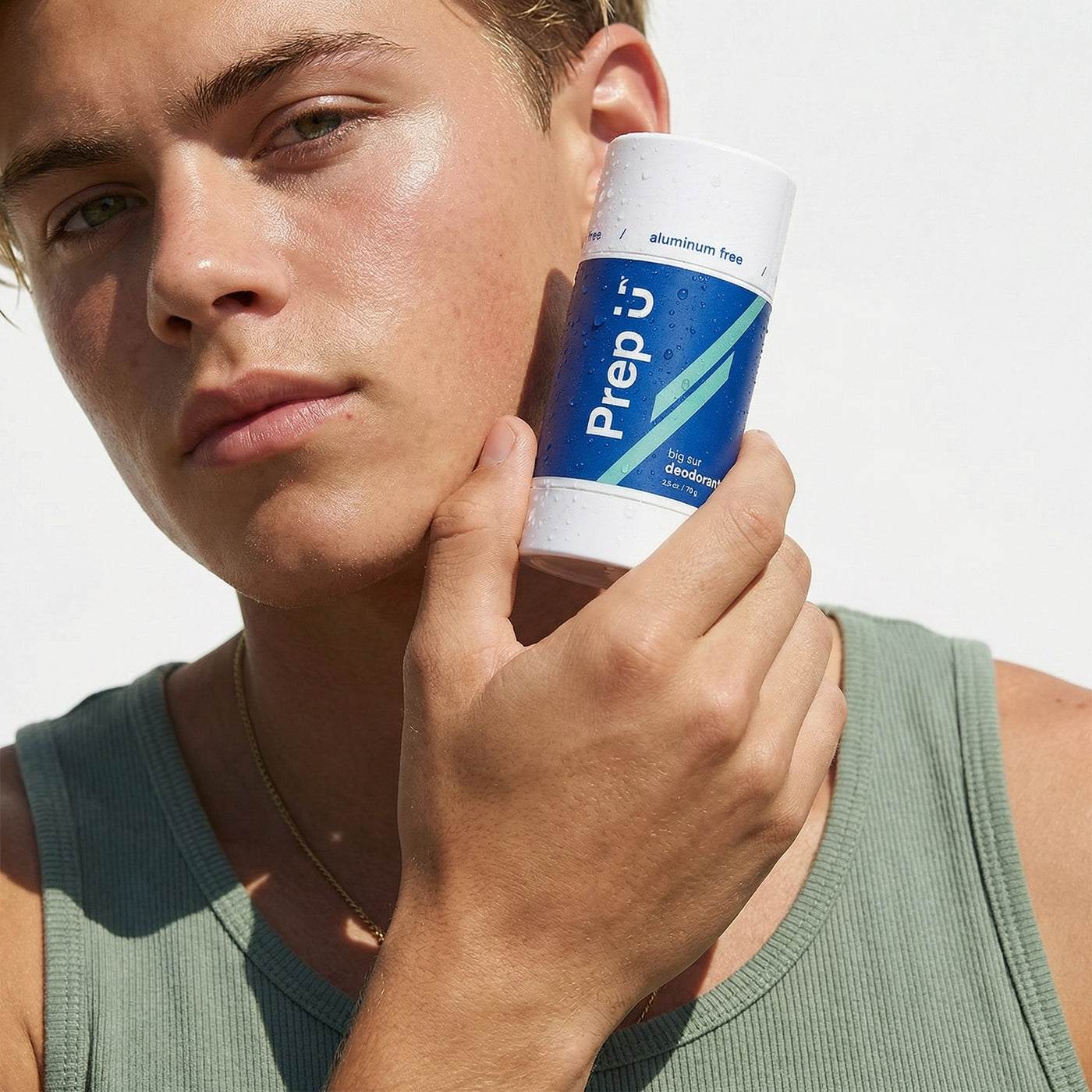
Armpit Rash From Deodorant: Causes, the Baking Soda Question, and What to Do
An armpit rash after a new deodorant is often contact dermatitis: underarm skin reacting to one ingredient, most often fragrance, baking soda, aluminum salts or alcohol. Heat, friction and shaving can cause the same kind of rash, so this guide also helps you tell them apart. It covers what an armpit rash looks like, how to read a label for baking soda, what to do while skin settles, and when a pediatrician or skin specialist should take a look.
One honest note first: our deodorant contains baking soda too. It is micro-dosed and listed after magnesium hydroxide, and below we explain why the order on the label tells you more than the ingredient's name does.
The Short Answer
- An armpit rash after starting a new deodorant is often contact dermatitis: underarm skin reacting to one ingredient.
- The usual triggers are fragrance, baking soda, aluminum salts and alcohol, and putting any of them on right after shaving makes things worse.
- Heat, sweat, chafing, ingrown hairs and fungal rashes can look alike, so timing and location are your best clues.
- In natural deodorant, baking soda gets most of the blame. It is alkaline, roughly pH 8 to 9, while skin averages below pH 5.
- Put the product away, keep the area clean and dry, and give skin time. Mayo Clinic says contact dermatitis often goes away in 2 to 4 weeks once the trigger is avoided.
- See a pediatrician or skin specialist if it spreads, blisters, oozes, or is not getting better within about two weeks.
What is an armpit rash from deodorant?
An armpit rash from deodorant is often contact dermatitis: underarm skin reacting to one ingredient in the product you swipe on every morning. It shows up where the deodorant touches, and it tends to get worse the longer the same product stays in the routine.
There are two kinds, and they feel different. Irritant contact dermatitis is the more common one. Nothing is wrong with the immune system; an ingredient is simply too harsh for that patch of skin, often because it is strong, used daily, or sitting on skin already raw from shaving or friction. Allergic contact dermatitis is an immune response to a specific ingredient, and fragrance compounds are a frequent example. It can appear after months of using a product with no trouble at all, which surprises a lot of families.
The underarm is a hard place for skin. It is warm, damp, folded and rubbed by sleeves all day, and for teens it is often freshly shaved or sweating through practice. Anything left there stays pressed against the skin for hours, which is why a deodorant can be fine on the back of a hand and still bother an armpit.
A rash that blisters, spreads, hurts, or has not improved in about two weeks is a reason to see a doctor, because several different conditions look alike and only an exam can sort them.
What does it look like?
Usually a red or darker, itchy patch in the exact spot where the product goes, sometimes with small bumps, dryness, flaking or a burning, stinging feeling. On deeper skin tones it can look purple, gray or brown rather than red.
Common signs parents describe:
- Itching or burning shortly after putting deodorant on
- Redness or darkening in the shape of the swipe, with a fairly sharp edge
- Rough, dry or flaky skin in the center of the underarm
- Small bumps and, in stronger reactions, blisters that may ooze or crust
What causes an armpit rash?
Most of the time it is one of five things, and more than one can be going on at once.
Fragrance. Scent compounds are a common trigger of allergic contact dermatitis in personal care products, whether the scent comes from a lab or from essential oils. A plant source does not make a fragrance gentler on reactive skin.
Baking soda (sodium bicarbonate). In natural deodorant this is the one people talk about most. It is alkaline, and healthy skin is naturally acidic. The next section covers why that matters.
Aluminum salts. These are the active ingredient in antiperspirants, not deodorants. They work by forming temporary plugs in sweat ducts, and some people find them stinging, particularly on freshly shaved skin.
Alcohol. Common in sprays and gels because it dries fast. Used daily it can leave stressed skin tight and dry.
Shaving and friction. A razor removes a thin layer of surface skin and can leave tiny nicks. Tight sleeves, sports gear and rubbing add to it.
Is it the deodorant, or something else?
Not every underarm rash comes from deodorant. Heat rash, chafing, ingrown hairs, eczema and fungal rashes can all show up in the same spot and look alike, especially to a worried parent at 10pm.
A rash that sits exactly where the product goes, and started around the time a product or habit changed, points to the deodorant. A rash that sits deeper in the fold, has a sharply defined, scaly edge, or keeps coming back whatever you use is worth a closer look. For a child who has had eczema before, our guide to eczema in the underarm explains what that looks like.
You do not have to sort it out alone. A pediatrician or skin specialist can usually tell by looking, and that visit is worth it before anyone starts guessing with creams.
Why does baking soda get the blame in natural deodorant?
Baking soda is the ingredient most often blamed when a natural deodorant causes a rash, because it is alkaline and underarm skin is naturally acidic. A baking soda solution sits at roughly pH 8 to 9, while skin averages below pH 5.
That gap matters. The slightly acidic surface of the skin, sometimes called the acid mantle, is part of how the outer layer holds moisture and keeps itself in good shape. A 2006 paper in the International Journal of Cosmetic Science, “Natural skin surface pH is on average below 5, which is beneficial for its resident flora”, makes that point in its title. Putting an alkaline powder on that surface every day, in a warm fold that is covered and sweating for hours, is a lot to ask of it. For some people the result is redness, itching, dryness or burning.
Many natural deodorants lean on baking soda as the main odor ingredient because it is cheap and good at the job, and when it is doing most of the work there tends to be a lot of it. Plenty of brands now sell a separate version without it for sensitive skin.
None of this makes baking soda poison, and plenty of people use it with no trouble. It means that when a natural deodorant causes a rash, baking soda is the first thing worth checking, and how much is in the formula matters as much as whether it is there.
Can aluminum-free deodorant cause a rash?
Yes. Aluminum is only one possible trigger, and an aluminum-free formula can still contain fragrance, essential oils, baking soda or alcohol.
This catches families off guard. They leave antiperspirant to be gentler, and within a week or two the underarm is red and itchy. When people stop using antiperspirant, the usual complaint is more sweat or odor for a while, not a painful, itchy patch. Redness and burning are a reason to pause the product, not to push through.
Three quick checks help sort it out:
- Top half of the ingredient list. If baking soda is one of the first few, it is a leading suspect.
- Fragrance or a long list of essential oils. An unscented version of the same product tells you a lot.
- Timing. A reaction that began after a new scent, brand or shaving habit points to that change.
How do you read an ingredient list for baking soda?
The higher baking soda appears on the list, the more of it is in the formula. In the United States, cosmetic ingredients run in descending order of amount, and anything at 1% or less can follow in any order. So you cannot read an exact percentage, but you can read the shape of the formula.
- In the first three or four ingredients: it is a main ingredient.
- After another odor ingredient, such as magnesium hydroxide: that other ingredient is present in a larger amount.
- Near the end of the list: it is a supporting ingredient.
How does Prep U formulate its deodorant?
Prep U deodorant does contain baking soda, and we would rather tell you that plainly than let you find it on the back of the stick. It is micro-dosed, and it is listed after magnesium hydroxide, which leads the odor work.
The full Unscented ingredient list, in label order: arrowroot powder, virgin coconut oil, shea butter, hydrogenated castor oil, beeswax, jojoba oil, magnesium hydroxide, sodium bicarbonate (baking soda), zinc oxide and tocopherols (vitamin E). Baking soda is eighth of ten. The scented sticks use the same base with a scent blend added.
Why keep any? A small amount extends odor control through a long school day, while magnesium hydroxide does most of the work.
The Unscented stick has no fragrance of any kind and no essential oils, and it is SkinSAFE Rated 100%; the scented sticks are rated 91%. That is an allergen screening result, not a promise that nobody will react, so patch test either way. Every stick is aluminum-free and paraben-free. It is deodorant, not antiperspirant, so sweat still happens and the job is odor. For more on the mineral that leads the formula, see our page on magnesium hydroxide in natural deodorant.
What should you do when an armpit rash shows up?
Put the product away, keep the area clean and dry, and give skin time without a new product on it.
A simple plan for the first few days:
- Pause the deodorant you were using. Set it aside and note the name and the first few ingredients.
- Wash gently. Lukewarm water and a mild, fragrance-free cleanser. Pat dry, no scrubbing.
- Let the area breathe. Loose cotton shirts help, and so does changing out of damp practice clothes quickly.
- Skip shaving the area for now. A razor on irritated skin adds another layer to the problem.
- Hold off on trying a new deodorant. A new product on reactive skin makes it hard to tell what is doing what.
When to call the doctor: see a pediatrician or skin specialist if the rash spreads past where the deodorant goes, blisters, oozes, looks infected (warmth, pus, fever), is very painful, or is not getting better after about two weeks. Do not try to self-diagnose a rash that is not following the usual pattern. Seek care right away for swelling of the face or lips, or any trouble breathing.
How long does an armpit rash last?
Mayo Clinic says contact dermatitis often takes 2 to 4 weeks to go away once the trigger is found and avoided. Itch and sting usually ease first. Redness or darkening can linger, and on deeper skin tones a darker patch may take weeks to fade. Repeat exposure slows everything down: the same product too soon, a new one before skin has settled, shaving over the area.
If it is not better within about two weeks, or it is severe, widespread or looks infected, see a provider. For a teen, that means a pediatrician or skin specialist.
How do you restart deodorant after a rash?
Restart only once the underarm looks and feels normal, and begin with a patch test rather than going straight back to both arms.
- Wait for normal skin. No redness, no sting, no flaking.
- Pick a product without fragrance and check where baking soda sits on the label. Lower is better for reactive skin.
- Patch test. A small amount on the inner forearm or one small spot of an underarm, once a day for several days.
- Apply to clean, fully dry skin, in a thin layer. Two light swipes is plenty.
- Leave time after shaving. Shave at night, apply in the morning.
If the same reaction comes back with a new product, that is useful information. Take a photo of both labels to the doctor so they can help pin down the ingredient. Our switching guide covers the first weeks after leaving antiperspirant, and our page on unscented deodorant for sensitive skin explains what to look for in a fragrance-free formula.
What should parents of teens know?
Teens are new to deodorant, new to shaving and sweating harder than ever, which is the exact mix that makes a rash more likely.
Puberty. The underarm sweat glands that produce odor switch on, and skin that never had a product on it every day suddenly gets one.
Shaving. Many teens start without anyone showing them how. Dull razors, dry shaving and deodorant right afterward are common. Suggest shaving at night with a clean razor and waiting until morning for deodorant.
Sports. Hours of sweat, tight gear and friction. Changing out of damp clothes soon after practice, and washing rather than stacking more deodorant on top, makes a real difference.
Borrowing. Teammates share sprays and sticks, and a strong scent from someone else's can is a common surprise trigger.
A lot of teens will not mention an itchy armpit until it is bad, so a quick, low-key check-in when a new product comes home helps. If a rash is spreading, blistering or not improving, go to a pediatrician or skin specialist rather than guessing. For younger kids, our page on deodorant for kids with sensitive skin covers what to look for in a first stick.
Why Prep U
What Makes Prep U Different
Magnesium Hydroxide Leads
Magnesium hydroxide is listed ahead of baking soda in every Prep U stick, so the label order shows which one leads the odor work.
Baking Soda, Micro-Dosed
Yes, there is baking soda in Prep U deodorant. It is micro-dosed and sits eighth of ten ingredients in the Unscented stick, well down the list.
An Unscented Option
The Unscented stick has no fragrance of any kind and no essential oils, which makes it the quickest way to rule fragrance in or out.
No Aluminum, No Parabens
Our deodorant is aluminum-free and paraben-free. It is deodorant, not antiperspirant, so nothing in it blocks sweat.
Prep U Picks
Choose the Right Prep U Deodorant

Unscented Deodorant
SkinSAFE Rated 100%. No fragrance of any kind.
- No fragrance and no essential oils
- Magnesium hydroxide first, baking soda micro-dosed
- Aluminum-free and paraben-free

Mini Natural Deodorant, Unscented
The Unscented formula in a travel size
- Same formula as the full-size Unscented stick
- An easy way to patch test before committing
- Fits a backpack or gym bag
Frequently Asked Questions
What causes an armpit rash?
Contact dermatitis, a reaction to an ingredient such as fragrance, baking soda, aluminum salts or alcohol, is a common cause. Shaving irritation, friction and sweat, and yeast or fungal overgrowth in the skin fold can look the same, so it is not automatically the deodorant. A pediatrician or skin specialist can usually sort it out by looking.
Can deodorant cause a rash?
Yes. When underarm skin reacts to an ingredient, the result is called contact dermatitis. Applying deodorant right after shaving makes a reaction more likely, because the razor has just removed a thin layer of surface skin.
What does an armpit rash from deodorant look like?
Usually a red or darker, itchy patch in the exact area where the product goes, sometimes with small bumps, dryness, flaking or a burning feeling. On deeper skin tones it can look purple, gray or brown. Stronger reactions can blister or ooze.
Can baking soda in deodorant cause a rash?
It can. Baking soda is alkaline and skin is slightly acidic, and used every day in a warm, damp underarm it leaves some people with redness, itching or burning. The ingredient list is the clue: the higher up baking soda sits, the more of it there is.
Why does natural deodorant give me a rash?
Most often baking soda or fragrance, including essential oils. Check whether baking soda is in the first few ingredients and whether the stick is scented. An unscented version of the same product tells you quickly which one it was.
Can aluminum-free deodorant cause a rash?
Yes. Aluminum is only one possible trigger, and an aluminum-free deodorant can still contain fragrance, essential oils, baking soda or alcohol. Redness and burning after switching are a reason to pause the product, not something to push through.
How long does an armpit rash last?
It varies. Mayo Clinic says contact dermatitis often takes 2 to 4 weeks to go away once the trigger is identified and avoided. Itching usually eases first, while redness or darkening can take longer to fade. If it is not better within about two weeks, see a doctor.
What should I do about an armpit rash from deodorant?
Pause the deodorant, wash gently with lukewarm water and a mild fragrance-free cleanser, pat dry, wear loose cotton and skip shaving the area for now. The section above has the full plan, including when to call a doctor.
When should my teen see a doctor for an armpit rash?
If it spreads beyond where the deodorant goes, blisters, oozes, is very painful, shows signs of infection like warmth, pus or fever, or is not better within about two weeks. Get care right away for swelling of the face or lips or any trouble breathing.
How can I tell if an armpit rash is from deodorant or something else?
A deodorant rash usually sits exactly where the product goes and starts around the time a product or habit changed. Heat rash, eczema, chafing, ingrown hairs and fungal rashes can look similar, and a fungal rash often sits deeper in the fold with a defined, scaly edge. A pediatrician or skin specialist can tell the difference by looking.
Can shaving make deodorant sting?
Yes. Shaving removes a thin layer of surface skin and can leave tiny nicks, so anything applied right afterward reaches skin with less protection. Shave at night with a clean razor and a gentle wash, then apply deodorant in the morning.
How do I patch test a new deodorant?
Apply a small amount to the inner forearm or a small spot of one underarm once a day for several days, on clean, dry skin. If nothing changes, move to normal use. Only patch test once the underarm looks and feels completely normal.
Does Prep U deodorant contain baking soda?
Yes, a micro-dosed amount of sodium bicarbonate. It is listed after magnesium hydroxide, and it is eighth of ten ingredients in the Unscented stick.
What does micro-dosed baking soda mean?
It means baking soda is a supporting ingredient rather than the main one: magnesium hydroxide comes first and sodium bicarbonate sits near the end of the list. You can run the same check on any brand by looking at where baking soda falls on its label.