
Every Question. Straight Answers.
Everything About Charcoal Soap
The complete Q&A: what it is, what it is good for, how to use it, and when it is the wrong choice.
Shop Charcoal Bar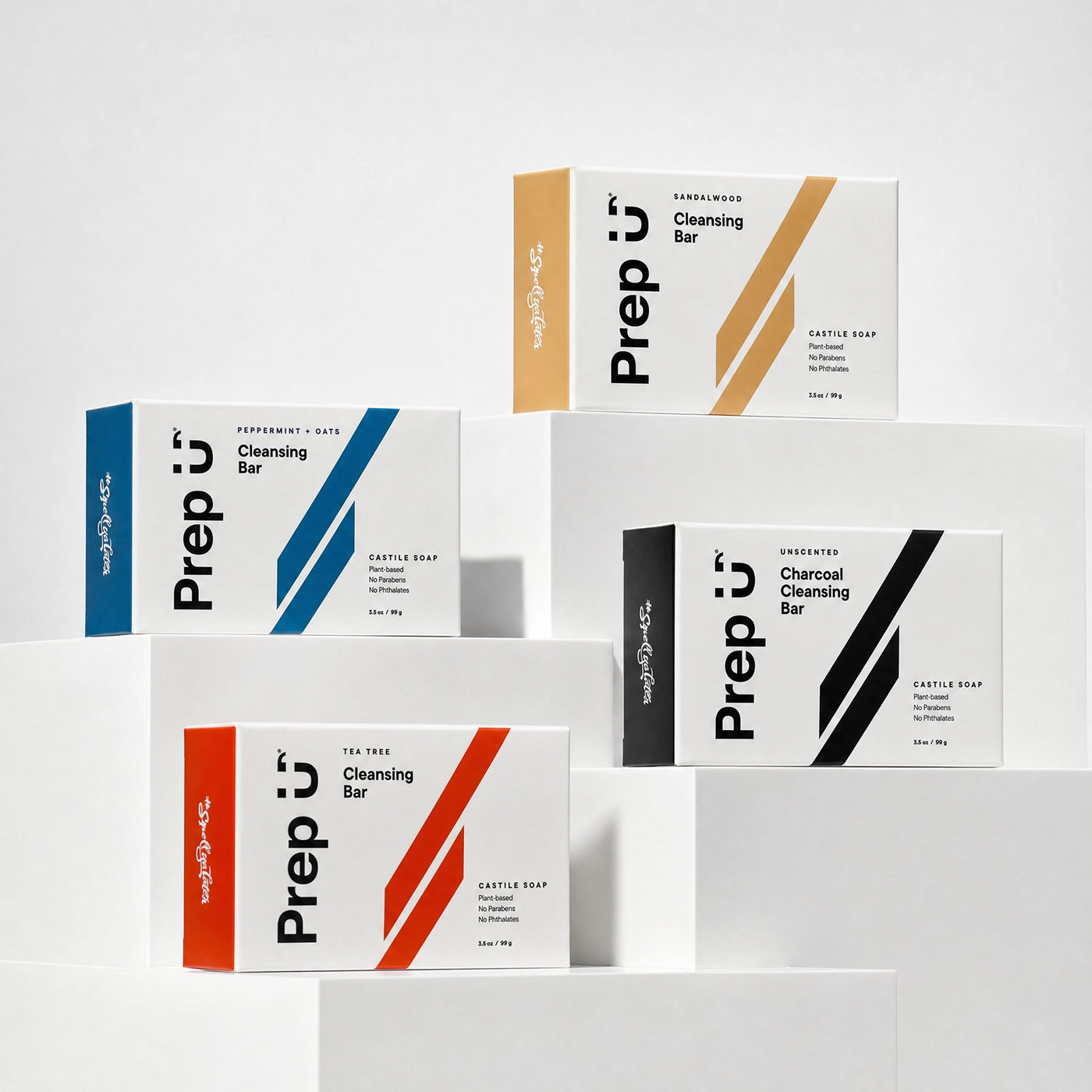
Everything About Charcoal Soap
Charcoal soap is bar soap made with activated charcoal, which adsorbs excess oil and surface buildup so it rinses away instead of sitting on the skin. It suits oily skin best; if your skin runs dry, a different bar is the better pick. Prep U is a teen personal care brand that has been making plant-based bars for ages 8 and up since 2017, formulated for skin that is changing rather than adapted down from an adult line. This page answers the questions people actually search: what it does, what it can and cannot do for breakouts, the side effects, how it differs from acne actives, how often to use it, and who should pick a different bar. Last reviewed September 2026 by the Prep U team.
Charcoal Soap: The Essentials
- What it is: bar soap containing activated charcoal, which adsorbs excess sebum and surface buildup so it rinses away.
- Best for: oily skin, the T-zone, back and chest buildup, and the shower after practice.
- On breakouts: it is a cosmetic cleansing bar, not a treatment. It lifts oil and buildup and rinses them away, which helps keep skin clearer. Deep cystic acne is a job for a dermatologist.
- Skip it if: your skin is dry or easily irritated, or your face already feels tight an hour after washing.
- Side effects: dryness and tightness on skin that was not oily to start with, plus a temporary gray cast if you under-rinse.
- How to use it: lather in your palms, massage 30 to 60 seconds, rinse until the water runs clear.
- How often: once a day suits most oily teen skin. Twice is the ceiling.
- Timeline: many people with oily skin notice less midday shine within 1 to 2 weeks of daily use. Results vary.
- Prep U's Unscented Charcoal Bar is rated SkinSAFE 100, with no fragrance of any kind.
What Charcoal Soap Is, and How It Actually Works
Charcoal soap is bar soap made with activated charcoal, a form of charcoal processed with high heat and steam until its surface becomes extremely porous. That porosity is the whole point: one gram carries an enormous amount of surface area, and every bit of it is somewhere for oil and debris to stick. The process is adsorption, meaning material binds to a surface. It is not absorption, where material soaks in. When you lather the bar, charcoal particles grab excess sebum and buildup sitting on the skin surface. When you rinse, the charcoal leaves and takes that material with it. This is a physical mechanism, not a chemical one. Nothing reacts with your skin. It binds, and it rinses. Which is why contact time matters so much, and why a fast lather-and-rinse does almost nothing.
What It's Good For
Oily skin, the T-zone, back and chest buildup, and post-workout cleansing. Those are the situations where excess oil is the issue, and excess oil is what charcoal adsorbs. It earns a place in a teen routine for a specific reason. Puberty raises androgen levels, higher androgens mean more active oil glands, and that is why a face can look fine at 7am and shiny by lunch. The bar lifts off the oil that is left sitting on skin at the end of the day. It is also a good fit for the shower straight after practice, when sweat, gear friction and oil have been sitting on the back and chest for two hours. For the full routine, see how to wash your face with bar soap.
Is It Right for Your Skin Type?
It is oriented to oily skin. The same oil-adsorbing behaviour that suits a shiny T-zone can leave already-dry skin feeling tight and flaky. A simple way to tell which side you are on: wash with a plain bar, wait an hour, and check. Shiny again means charcoal is a good fit. Tight or flaky means it is not. Who it suits: teens with visible shine a few hours after washing, oily skin across the nose, forehead and chin, back and chest buildup, and athletes showering after practice. Who should pick something else: dry skin, skin already irritated by an acne routine, or anyone whose skin stings with most cleansers. A bar without the charcoal and walnut hull exfoliant is the better call. Compare the options at compare Prep U cleansing bars, or read charcoal soap and sensitive skin.
Charcoal Soap and Breakouts: What a Cleansing Bar Can and Cannot Do
Prep U's Charcoal Bar is a cosmetic cleansing bar. It does not treat acne, and it will not resolve deep cystic acne. What it does is lift excess oil and surface buildup off the skin and rinse them away, which helps keep skin clearer. Oil and dead skin sitting on the surface are part of why blackheads and small surface bumps form, so removing more of it at each wash leaves less of it behind. In practice, many people with oily skin notice less shine within 1 to 2 weeks of daily use. Results vary. What a cleansing bar cannot do is reach a deep, painful cyst under the skin. That is a follicle problem below the surface. The American Academy of Dermatology advises seeing a dermatologist for deep, painful acne rather than waiting it out. If breakouts are mostly on the face, pair the bar with a dedicated cleanser: see the best face wash for teenage boys with acne.
How It Compares to Salicylic Acid and Benzoyl Peroxide
They do different jobs. Charcoal is a cleanser that binds and removes oil. Salicylic acid and benzoyl peroxide are regulated over-the-counter drug actives that stay on the skin and change how the follicle behaves. Salicylic acid is an exfoliating acid that works inside the pore opening to loosen the plug of oil and dead skin. Benzoyl peroxide acts on the bacteria involved in inflamed acne. Both carry a drug facts label and can dry or irritate teen skin at higher percentages. A charcoal bar has no drug actives at all. It removes material mechanically and rinses off in under a minute, which makes it gentler and slower. In a real routine they are not rivals. Plenty of teens use a charcoal bar in the shower for the back and chest and keep an active for specific spots on the face. If skin is already dry or stinging from an active, drop the charcoal on the face and keep it below the neck. Prep U bars are cosmetic cleansers, not drug products.
Can You Use It Every Day?
Yes. Once a day suits most oily teen skin. Twice a day is the ceiling, and only for skin that shows no tightness after a week. Daily use is what produces the result. The oil comes back every day, so removing it once and stopping does nothing across a month. Consistency matters more than intensity. Combination skin is where people go wrong. Washing twice daily often over-dries the cheeks while the T-zone is still oily by afternoon. Start at once a day, in the evening if you only pick one, since that is when the day's oil and sweat have built up. Athletes in two-a-days are the exception worth naming. A morning shower and a post-practice shower are both non-negotiable, so use the bar on the back and chest at both and something gentler on the face at the second wash. If skin starts feeling tight, drop to every other day rather than quitting.
The Side Effects of Charcoal Soap, and Who Runs Into Them
The most common side effect of charcoal soap is dryness: tightness, flaking, or new irritation on skin that was not oily to begin with. It is a mismatch problem rather than a safety problem, and it stops when the bar stops. Dryness and tightness. Charcoal binds oil. On a shiny T-zone that is the whole point. On skin that did not have oil to spare it reads as a stripped, squeaky feeling within an hour of washing, and after a week or two as flaking around the nose and jaw. That means the bar is wrong for that skin, not that the bar is defective. Rebound oil from over-washing. Strip skin hard enough and often enough and the oil glands frequently answer with more oil, which is the opposite of the goal. Twice a day is the ceiling for most teens and once a day is enough for many. The base matters too: a bar built on sodium lauryl sulfate strips more aggressively than a cold-process castile bar does. Gray residue. Under-rinsed charcoal can leave a faint cast on skin and a real mark on a white towel or a light pillowcase. Cosmetic only. Rinse until the water runs clear and it stops happening. Fragrance reactions. In a scented charcoal bar the fragrance is usually the trigger for reactive skin rather than the charcoal. A fragrance-free bar takes that variable out. Prep U's Unscented Charcoal Bar has no fragrance of any kind. Worth checking the label if there is a tree nut allergy in the house. Prep U's Unscented Charcoal Bar contains natural walnut hull powder, and every Prep U bar contains shea butter. Both are worth knowing before the first wash rather than after it. What is not a side effect. A charcoal bar does not thin skin, does not build up in the body, and does not need a break or a cycle. If skin stings, tightens or reddens after a week, stop and move to a bar without the charcoal. When to stop troubleshooting at home. Irritation that continues after a week without the bar, or a rash that spreads past where the soap went, is worth raising with a doctor rather than swapping products again.
Does It Fade Acne Scars and Dark Marks?
No. A bar of soap does not fade acne scars or the dark marks left behind after a breakout. It works on the skin surface during a 60-second wash, and those marks sit deeper. The flat brown or purple spots most teens call scars are usually post-inflammatory hyperpigmentation, which is extra pigment left behind after inflammation settles. They fade on their own over months. Sun exposure makes them last longer, which is why sunscreen does more for them than any cleanser. True scarring, meaning a pitted or raised texture change, is structural and needs a dermatologist. A charcoal bar is a cleanser and makes no claim about scars or dark marks. Any product claiming a bar of soap erases scars is overstating what the ingredient can do.
Is Charcoal Soap Antibacterial?
No. Prep U bars are cosmetic cleansing bars and make no antibacterial claim. Activated charcoal has no drug actives and does not chemically act on bacteria at all. It binds to material on the skin surface and carries it down the drain when you rinse. That distinction matters because charcoal products are often marketed as if they do something medical. They do not. Any soap, charcoal included, reduces what is sitting on skin because lathering and rinsing physically removes it. That is cleansing. If a fungal concern on the skin is the actual issue, that is a question for a doctor or pharmacist rather than a cleansing bar. What soap labels mean covers what over-the-counter antifungal and antibacterial labels legally mean and when an over-the-counter product is what you actually need.
How It Compares to a Plain Bar
For oily teen skin, a charcoal bar is a reasonable step up from a plain bar. If skin runs dry, a bar without the charcoal and walnut hull exfoliant is the better fit. The choice depends on skin type and what you want added, not on the ingredient sounding fancier. Plain soap uses surfactants to lift surface dirt and oil. That is fine for general cleansing, but it does not include an oil-adsorbing ingredient the way a charcoal bar does. The base matters as much as the charcoal. A lot of charcoal bars on the shelf sit on a synthetic detergent base built around sodium lauryl sulfate. SLS strips efficiently, and skin often answers a strip by producing more oil. Prep U's Unscented Charcoal Bar uses a cold-process castile base with activated charcoal and natural walnut hull powder. No SLS, no synthetic detergents, no fragrance. More on the base itself at castile bar soap for teens.
Using It Correctly: the 60-Second Rule
Lather the bar in your palms, massage the lather onto skin for 30 to 60 seconds, then rinse until the water runs clear. Contact time is the step almost everyone skips, and it is the step that makes the bar work. Lather in your hands rather than dragging the bar across your face. It spreads the charcoal more evenly and is gentler on skin that is already reactive. Spend the extra seconds on the oily zones: nose, forehead, chin, back and chest. Rinse completely. Charcoal left behind can gray the skin temporarily, and it looks worse on a towel than it does on you. Once or twice a day is the range. On combination skin, twice often over-dries the cheeks while the T-zone is still fine, so start at once and add the second wash only if skin tolerates it. Step-by-step detail lives at how to use charcoal soap.
Where It Fits Around Shaving
Wash first, then shave. Clean skin with less surface oil gives the blade a better surface and reduces the buildup that gets dragged into follicles. A charcoal bar is not a shave soap, though. It does not produce the slick cushioning lather a razor needs, so it belongs in the step before, not underneath the blade. Skip it immediately after shaving on the same patch of skin. A fresh shave leaves the barrier temporarily raw, and an oil-binding bar on top of that is what turns a normal shave into a stinging one. For teens shaving two or three times a week, the pattern that holds up is simple. Charcoal bar in the shower, shave after, then nothing aggressive on that skin until the next day. If the neck or jaw reacts with small bumps, move the face to a different bar and keep the charcoal on the back and chest.
What It Will Not Do
It is a cleanser. It is not a treatment, and several popular claims about it do not hold up. It will not treat or clear deep cystic acne. Cysts sit below the surface in the follicle and need medical care. Prep U bars make no antibacterial or antifungal claim. There are no drug actives in it. It will not fade acne scars or dark marks. Those sit deeper than a 60-second wash reaches. It will not whiten teeth. Charcoal on enamel is unproven and potentially abrasive, which is worth saying out loud because that claim shows up constantly. It will not pull toxins out of your body. Nothing applied to skin in a 60-second wash reaches the bloodstream, and toxin-removal claims on a soap label are marketing language rather than a mechanism. It will not work overnight. Many people with oily skin notice less shine in 1 to 2 weeks of daily use, and results vary.
Back and Chest After Practice
A charcoal bar suits the back and chest because the oil glands there are larger and more productive than the ones on the face, and oil is what charcoal adsorbs. Three things stack up on a teen athlete's back. The glands produce more sebum per square inch. Sweat after practice creates a warm, damp surface where everything sits longer. And tight gear, jerseys and backpack straps press dead skin and buildup into follicles. The routine that works: shower within about 30 minutes, work the bar across the back and shoulders for a full 60 seconds, rinse completely, then put on clean dry clothes rather than the same practice shirt. One caution. American Academy of Dermatology guidance on back acne is explicit that scrubbing skin with breakouts makes them worse, so use the lather and let it sit rather than working the bar hard against the skin. Give it a few weeks of consistent use before judging it. For the gear side, see locker room hygiene for teen athletes.
Building It Into a School-Year Routine
Start it at the beginning of a term rather than mid-season, because a routine needs a few weeks of consistent use to judge and fall sports ramp fast. Two showers a day become normal once practice starts, so the bar has to be one the skin can handle twice daily. A fragrance-free bar is the safer bet when the second wash is non-negotiable. Put a bar in the gym bag, not just the bathroom. The post-practice shower at school is where the back and chest actually get cleaned, and a bar travels better than a bottle that leaks in a locker. One bar does not cover everything. Pair it with a deodorant that suits a changing body: see natural deodorant for boys for the other half of the routine.
What's Actually in Prep U's Unscented Charcoal Bar
The full ingredient list is short: oils (coconut, olive, castor, shea butter) saponified with sodium hydroxide in spring water, with activated charcoal and natural walnut hull powder. That is the whole formula. The walnut hull is the physical exfoliant, which is what makes this the bar people reach for on backs and shoulders rather than faces. There is no fragrance of any kind in it, which is why it is rated SkinSAFE 100. Two things a reaction-prone shopper should know before buying. Natural walnut hull powder is derived from a tree nut, so anyone with a tree nut allergy should talk to their doctor first. And every Prep U bar contains shea butter. Neither is a reason for most people to avoid the bar, and both are worth knowing rather than finding out in the shower. The bars are hand-made in small batches, cold-process, and cured for weeks. Shop the Unscented Charcoal Bar, $9.00.
Why Prep U
What Makes Prep U Different
Mechanism First, Marketing Second
Adsorption is a physical process. Activated charcoal binds excess oil and surface buildup and carries it away when you rinse. Knowing the mechanism is what lets you use the bar correctly and expect the right timeline instead of the one on the label.
Castile Base, No Synthetic Detergents
Cold-process castile base, hand-made in small batches. No SLS and no synthetic detergents. The base matters as much as the charcoal, because an SLS bar strips the barrier and skin often answers by producing more oil.
Rated SkinSAFE 100
The Unscented Charcoal Bar is rated SkinSAFE 100, the highest rating SkinSAFE gives. SkinSAFE rates products from the full ingredient label.
Built for Ages 8 and Up
Prep U has formulated for kids and teens since 2017, for skin that is changing rather than adult skin scaled down. That is the difference between a bar a 12-year-old can use twice a day and one that leaves their face tight by third period.
Prep U Picks
Choose the Right Prep U Bar Soap

Unscented Charcoal Bar
Oily Skin • Deep Clean • Post-Practice
- Activated charcoal adsorbs excess oil and surface buildup so it rinses away
- Cold-process castile base with no SLS and no fragrance of any kind
- Rated SkinSAFE 100, with natural walnut hull powder for backs and shoulders

Tea Tree Cleansing Castile Bar
Daily Shower • Athletes • One Essential Oil
- Plant-based castile bar scented with tea tree essential oil
- An everyday alternative to the charcoal bar
- Popular with athletes for the shower after practice

Blue Tansy Cleansing Bar
Scent-Led Pick • Blue Tansy
- An alternative when you want a bar without the charcoal exfoliant
- Same castile base as every other Prep U bar
- Plant-based castile base, scent-led
Frequently Asked Questions
What is charcoal soap good for?
Charcoal soap suits oily skin, the T-zone, back and chest buildup, and post-workout showers. Activated charcoal adsorbs excess oil and surface buildup so it rinses away instead of sitting on the skin. It is not the best match for dry skin, where the same oil-adsorbing action can leave skin tight.
What does charcoal soap do?
Charcoal soap binds excess oil, sweat residue and surface buildup to the charcoal particles in the lather, then carries all of it away when you rinse. The process is adsorption, meaning material sticks to the charcoal surface. It is physical rather than chemical, which is why 30 to 60 seconds of contact time changes the result so much.
Does charcoal soap have side effects?
The common one is dryness: tightness, flaking or irritation on skin that was not oily to begin with. Over-washing can also push oil glands to produce more, especially with bars built on sodium lauryl sulfate. Under-rinsed charcoal can leave a temporary gray cast on skin and towels. Fragrance is the usual trigger for reactive skin, which is why a fragrance-free bar is safer there.
Is charcoal soap good for acne?
Prep U's charcoal bar is a cosmetic cleansing bar and does not treat acne. It lifts excess oil and surface buildup and rinses them away, which helps keep skin clearer. Many people with oily skin notice less shine within 1 to 2 weeks of daily use; results vary. Deep cystic or painful acne is a medical case for a dermatologist.
Is charcoal soap good for your skin?
For oily skin, it is a reasonable choice: it lifts the excess oil that drives shine. For dry skin, a bar without the charcoal and walnut hull exfoliant is the better fit, since the same mechanism removes oil that dry skin needs and can leave it tight and flaky. A quick test: if your face is shiny an hour after washing, charcoal fits.
Is charcoal soap antibacterial?
No. Prep U bars are cosmetic cleansing bars and make no antibacterial claim. Activated charcoal contains no drug actives and does not act on bacteria chemically. It binds to material sitting on the skin and removes it when you rinse, which is cleansing. For a fungal concern on the skin, see a doctor or pharmacist; a cleansing bar is not the tool.
Is charcoal soap good for your face?
It can be used on the face if your skin runs oily. Once daily is well tolerated by most oily skin. Twice daily is often too much for combination skin, where the cheeks dry out before the T-zone does. Use it on the oily zones and switch to a gentler cleanser on drier areas.
Can you use charcoal soap every day?
Yes. Once a day is the right cadence for most oily teen skin, and daily use is what produces results, since oil returns every day. Twice daily is the ceiling and suits athletes showering after practice more than it suits combination skin. If skin starts feeling tight, drop to every other day rather than stopping altogether.
Does charcoal soap dry out your skin?
It can, and that is the point of matching it to skin type. Charcoal adsorbs oil, so skin that does not have oil to spare ends up tight. Oily skin usually tolerates once-daily use with no dryness. If your face feels tight an hour after washing, move to a bar without the charcoal and keep charcoal for the back and chest.
Is it better than salicylic acid for teen acne?
They do different jobs. Salicylic acid is an over-the-counter drug active that stays on skin and works inside the pore opening. Charcoal soap is a cleanser with no drug actives that binds oil and rinses off in under a minute. Charcoal is gentler and slower. Many teens use a charcoal bar in the shower and reserve an active for specific spots.
Does charcoal soap help with acne scars?
No. It works on the skin surface during a short wash, and marks left after a breakout sit deeper. Most of what teens call scars is post-inflammatory hyperpigmentation, which fades over months and lasts longer with sun exposure. A charcoal bar is a cleanser and makes no claim about scars or dark marks.
How long does charcoal soap take to work?
Many people with oily skin notice less midday shine within 1 to 2 weeks of daily use; results vary. Contact time is the variable most people get wrong: 30 to 60 seconds of massage before rinsing produces noticeably better results than a quick lather and rinse.
Does charcoal soap remove blackheads?
A cleansing bar does not treat blackheads. A blackhead is oil sitting in a pore opening that has oxidised and darkened. Charcoal adsorbs oil and buildup from the skin surface during daily washing, so less of it is left on skin. Results vary and take consistent daily use rather than a single wash.
How do you use it, step by step?
Wet the bar and work a lather in your palms rather than rubbing the bar on your face. Massage the lather in for 30 to 60 seconds, focusing on the nose, forehead, chin, back and chest. Rinse until the water runs clear so no charcoal is left behind. Once or twice daily.
Should you use it before or after shaving?
Before. Washing first leaves less surface oil for the blade to drag into follicles. It is not a shave soap, so it belongs in the step before rather than underneath the razor. Avoid using it on freshly shaved skin the same day, since a fresh shave leaves the barrier temporarily raw and an oil-binding bar on top of that stings.
Should I choose the charcoal or the tea tree bar?
They suit different situations. Charcoal adsorbs excess oil, so it is the pick for shine and oily skin. Tea Tree is a castile bar scented with tea tree essential oil that many teens use for the everyday shower after practice. Neither one is a medical treatment for acne; both are cosmetic cleansing bars.
Can a 12-year-old use it?
Yes, if their skin runs oily. Prep U makes personal care for ages 8 and up, and the Unscented Charcoal Bar is rated SkinSAFE 100 with no fragrance. Start with once daily and watch for tightness. If their face feels dry after a week, move to a different bar and keep the charcoal for the back and chest.
Is it right for sensitive skin?
It has no fragrance, but the walnut hull powder is a physical exfoliant, and some sensitive skin does not like that. If your skin stings with most cleansers, a bar without an exfoliant may suit better, and a dermatologist can advise on persistent sensitivity. If you want the charcoal anyway, limit it to the back and chest and keep the face on something gentler.
Does it pull toxins out of your skin?
Not in the way the phrase suggests. Activated charcoal adsorbs oil and buildup on the skin surface and rinses away with them. Nothing in a 60-second wash reaches the bloodstream or the organs, and toxin-removal claims on soap labels are marketing language rather than a mechanism. The real benefit is simpler and still worth having: less oil left on skin after a wash.
What is in Prep U's Unscented Charcoal Bar?
Oils (coconut, olive, castor, shea butter) saponified with sodium hydroxide in spring water, with activated charcoal and natural walnut hull powder. That is the whole list. There is no fragrance of any kind. Walnut hull powder is derived from a tree nut, so anyone with a tree nut allergy should check with their doctor first.
What is the best charcoal soap for teens?
Look for activated charcoal on a cold-process castile base with no SLS and no added fragrance, since a stripping base can push oil production higher. Prep U's Unscented Charcoal Bar uses activated charcoal with natural walnut hull powder and is rated SkinSAFE 100. Match the bar to the skin type rather than to the ingredient that sounds strongest.