
Step by step, for face and body
How to Use Charcoal Soap Correctly
The method, how often, and what to expect from the Unscented Charcoal Bar.
Shop Charcoal Bar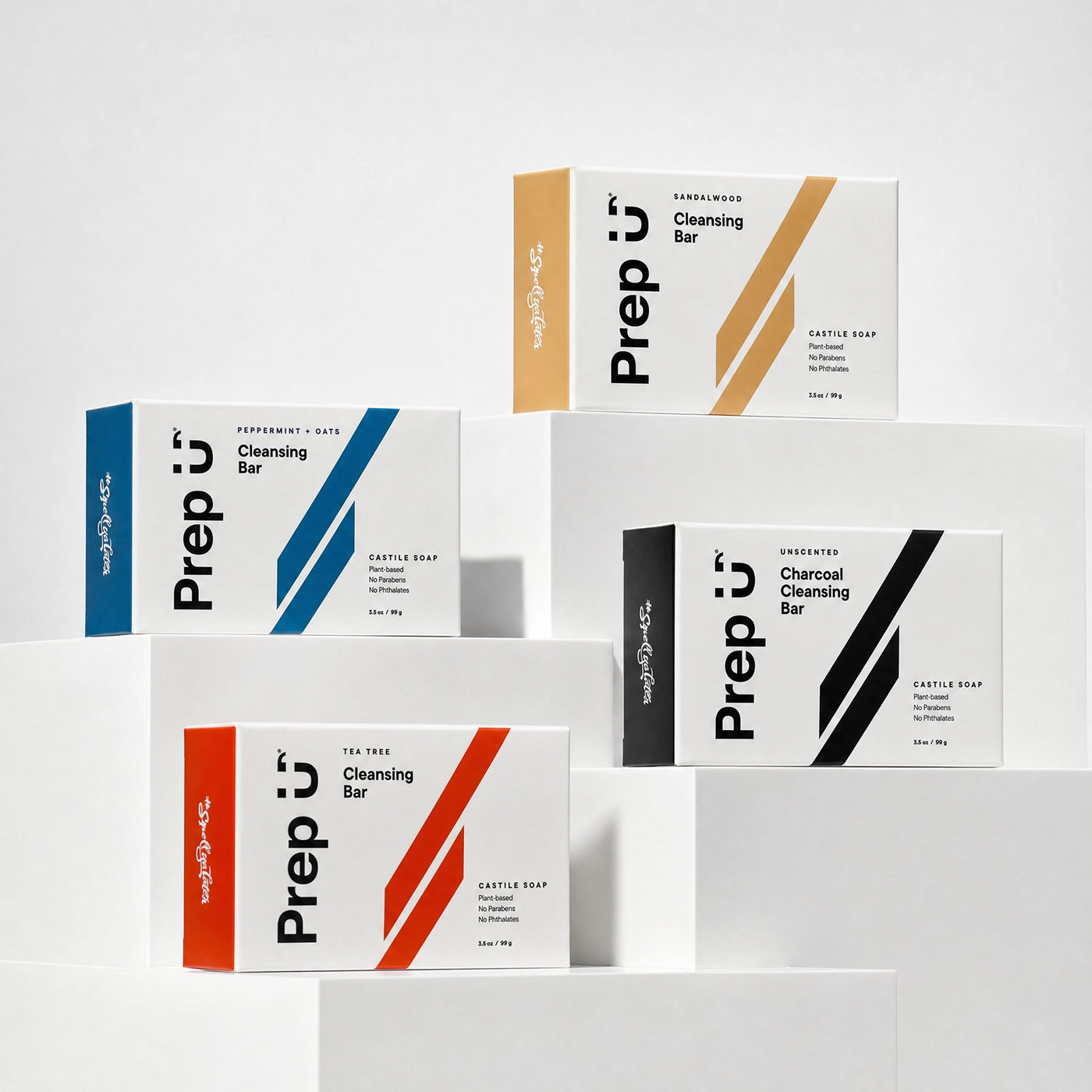
How to Use Charcoal Soap Correctly
Prep U's Unscented Charcoal Bar works through adsorption: the charcoal's surface draws in surface oil and buildup so they rinse away. How well that goes depends less on the bar than on three habits: enough lather time, a thorough rinse, and washing as often as your skin can handle, which for most people is once a day.
How to Use Charcoal Soap: The Method
- Wet your skin with lukewarm water.
- Work up a lather between your palms instead of dragging the bar across your face.
- Massage the lather on in gentle circles for 30 to 60 seconds.
- Rinse thoroughly. Leftover charcoal residue is a common reason a bar gets blamed for irritation.
- Pat dry with a clean towel. Skin should feel clean, not tight.
Step-by-step: how to use charcoal soap on your face
Wet your face with lukewarm water, work the bar into a lather between your palms, massage the lather on for 30 to 60 seconds, rinse until the water runs clear, and pat dry with a clean towel.
The lather-in-your-hands step matters more than it sounds. Dragging a bar straight across your skin puts all the pressure in one spot, and this bar has natural walnut hull powder in it, a mild physical exfoliant. A lather spreads that out, so keep your fingertips light and move in small circles. No scrubbing needed.
If you want the full story on what charcoal soap is and how it behaves, our complete charcoal soap guide covers it.
Face versus body: where to use it and what to skip
The same bar does both jobs, but the two places get different handling. Facial skin reacts faster than the skin on your back, and this bar has walnut hull powder in it, so on your face stick to fingertips and lather. Work through the oily parts, which are usually the forehead, nose and chin, and stop short of your eyes. Lather in the eyes stings, so rinse by cupping water up to your face instead of letting the shower spray hit it head on.
Some areas should not get the bar at all: the eyelids and the thin skin right around the eyes, your lips, the genital area, and any skin that is broken, cracked, scabbed or sunburned. If you shaved that day, skip the bar on the shaved patch or use lather only with no pressure, because shaving leaves the surface a little scraped and a scrub powder will find every spot.
On the body the rules loosen. Chest, back, shoulders and legs can take more pressure, and a washcloth or mesh soap bag helps you reach and build a good lather. Underarms are fine for a regular wash, but if the skin there is red or tender after shaving, give it a day.
Charcoal soap benefits: what it does and what it doesn't
Activated charcoal is full of tiny pores, so even a small amount has a huge surface for oil and grime to stick to. In a soap that matters for the minute or so the lather is on your skin: oil and sweat cling to the charcoal, and the rinse sends them down the drain. That is the real benefit, a bar that leaves oily or sweaty skin feeling clean.
The Unscented Charcoal Bar also has no fragrance of any kind, which helps if scented soap bothers you, and the walnut hull powder gives it a light scrubbing action on shoulders and backs.
What it can't do is change how much oil your skin makes, or treat acne. Hormones set the oil level, and a cleanser only works on the surface. If breakouts are painful, deep or lasting, that is a question for a doctor.
Using it on your back, chest and shoulders
Use it in the shower within about 30 minutes of finishing practice or a workout, before sweat and oil have had hours to sit on your skin.
Build the lather in your hands or on a washcloth, then work it over your upper back, chest and shoulders, the spots that stay covered under pads and jerseys. Give it the same 30 to 60 seconds and rinse well. Shoulders and backs can take a bit more pressure than your face, but there is still no need to scrub.
Our post-workout soap guide has more on building a routine around practice.
How often is too often?
Once a day is right for most teen skin. Twice works for oily or very active skin, like a wash after practice and another at night. Three or more times a day usually just leaves skin tight, and tight skin can overcompensate by making more oil.
If you notice tightness or flaking, drop back to once a day and add a plain moisturizer.
How to tell you are overdoing it
Skin tells you fairly quickly if you are washing too much; the trick is reading what it says. The first sign is skin that feels tight, squeaky or stretched when you towel off. That squeaky feeling gets mistaken for clean, but it mostly means the wash lifted more oil than it needed to, and some of the fats that help skin hold water went down the drain with it.
The second pattern is shiny, then flaky. Skin that has been stripped can look glossy by mid-afternoon as it makes extra oil to make up the difference, and then show dry flakes along the nose, the jaw or around the mouth. If you are oily in the forehead and flaky on the cheeks at the same time, that is a mismatch between how often you wash and what your skin can take. It is not a sign to scrub harder.
Other signals are stinging when you rinse, redness that is still there well after you have dried off, new rough patches, and itching along the hairline, which usually means residue is being left behind.
The fix is boring on purpose. Drop back to once a day, move your face to every other day for a week, use lather only with no pressure, and follow with a plain moisturizer. Give it several days before you judge. If skin has not settled after that, stop using the bar and ask a doctor, because lasting redness can have causes that have nothing to do with soap.
Rinse longer than you think you need to
Leftover charcoal residue is a common reason a bar gets blamed for irritation. Keep rinsing until the water runs clear, and check the places lather hides: along the hairline, under the jaw, behind the ears and down the neck.
Finish with a pat, not a rub, using a clean towel. A towel that has hung damp in the bathroom for a week is not the finish you want on freshly washed skin.
The first two weeks, week by week
Skin, sweat and sports schedules vary, so there is no guaranteed timeline. This is a sensible way to ease in, with what to watch for at each stage.
Days 1 to 3. Start with a patch test. Wash a small area, like the side of your jaw or the inside of your forearm, rinse well and leave it for a day. Itching, redness or a rash means stop. If it looks the same as the skin next to it, use the bar once a day: at night on your face, and in the shower after practice for your body. With a fresh bar, go easy on pressure while you learn how your skin handles the walnut powder.
Days 4 to 7. Keep the routine exactly the same. The thing to check is how skin feels an hour after washing, not just in the shower. Comfortable is the goal. You may read online about a "purge" phase where skin gets worse before it gets better. A plain cleanser has no active ingredient that would cause one, so a rash or new bumps are more likely irritation, leftover residue or coincidence, and the answer is to wash less, not to push through.
A cleanser works on the surface and then rinses off, so nothing builds up over time. What you notice in the first week is a fair preview of what you will notice in the fourth.
Days 8 to 14. If skin is comfortable, you can add a second wash on heavy sweat days, or move your face from every other day to daily. Change one thing at a time so you know what caused what. At the end of two weeks, ask whether your skin feels fine between washes. If it does, the routine fits. If it does not, wash less before you blame the bar, and see a doctor about breakouts that keep coming back, since a bar of soap is a cleanser and not a treatment.
Where the bar fits in a simple routine
A basic day looks like this: a rinse with water in the morning (or a quick wash if you slept in sweat), moisturizer if your skin wants it, then sunscreen. At night, wash with the bar, pat dry and moisturize. After practice, a shower with the bar on your body covers the rest.
The logic is that a cleanser removes what built up during the day, like sweat, oil, dust and sunscreen, by helping oil and water mix so both rinse away. It cannot put anything back. A plain, fragrance-free moisturizer holds water in the outer layer of skin and makes up for some of what the wash lifted, which is why skin that feels tight after cleansing usually settles with a thin layer applied while it is still slightly damp. Sunscreen does a separate job in the morning, and the bar does not change that, so wear it whichever cleanser you use.
Be careful about stacking strong products on top of this one. Exfoliating acids, retinoids and benzoyl peroxide can each leave skin tight by themselves, and adding a bar with a scrub powder makes it impossible to tell which one is responsible. If a doctor has prescribed something for breakouts, ask them how to fit the bar around it before you start.
Charcoal bar versus a liquid face wash or body wash
At the basic level, they clean the same way. A cleansing molecule has one end that grabs oil and one end that grabs water, so oil gets pulled into the rinse water and carried off. The differences are in the chemistry behind it and what else is in the formula.
A true bar soap like this one is made by saponification: plant oils react with sodium hydroxide and become soap and glycerin. Soap made that way tends to land on the alkaline side, while the surface of your skin runs slightly acidic. Healthy skin recovers from a wash, but it is the reason a bar is less forgiving if you leave the lather on, wash too often or skip the rinse. Many liquid washes use synthetic surfactants that can be formulated closer to skin's own acidity. That is a design choice and not a guarantee that a liquid is gentler. Some liquid washes are harsh and some bars are mild.
The other difference is the scrub. The walnut hull powder in this bar is always there, and you control it only with pressure. A liquid wash usually has no scrub at all, or you add one separately. If you want a wash with no exfoliation, use the lightest lather on your face or pick a smooth bar. If you want a rougher wash for a sweaty back and shoulders, the bar suits that.
On the practical side, a bar travels without leaking and lasts a long time if it dries between uses. A pump bottle stays dry between washes, while a bar sits wet and needs somewhere to drain. Neither is better in general. It comes down to the skin on the part of the body you are washing.
Who it suits, and who should skip it
The bar is built for oily, sweaty skin, which means athletes, kids with a lot of sports and anyone whose face is shiny by lunch. If you have combination skin, use it on the oily zones and keep the lather light on the dry ones. Normal skin does fine with it a few times a week on the face and daily on the body.
It is a poor fit for the face if your skin is already dry, tight or flaky, since soap plus a scrub powder will make that worse. Use it on your body only, or look at the gentler daily bars in the section below.
Skip the bar and ask a doctor or pediatrician first if you have eczema or a rash that is active, inflamed or open breakouts with broken skin, or a sunburn. Ask a pediatrician before using it on a younger child. Anyone with a tree nut allergy needs a doctor's go-ahead first, because the walnut hull powder in this bar is a tree nut ingredient and the base includes shea butter. For more on reactive skin, our guide on charcoal soap for sensitive teen skin goes through it.
Which bar fits which job
Looking for the gentlest option? The Unscented Charcoal Bar has no fragrance of any kind and is the only bar we make rated SkinSAFE 100%. That rating is a screening of the ingredient list, not a promise that nobody will react. It is the pick for oily or sweaty skin and for anyone who does not want a scent. Prefer a scent for everyday use? Sandalwood and Blue Tansy are our charcoal-free daily bars.
All of our bars share the same cold-process castile base made from plant oils, including shea butter, so the difference is what is added on top. Still deciding between a charcoal bar and a tea tree one? Our charcoal vs. tea tree soap comparison lays out the difference. If your skin is touchy, read is charcoal soap safe for sensitive teen skin first, and the bar soap hub shows the whole lineup.
Storing the bar, and taking it to the gym or on a trip
Soap dissolves in water, so every hour a bar spends sitting wet is soap you do not get to use. Set it on a draining dish or a rack so the underside can dry, keep it out of the direct spray, and flip it now and then. The walnut powder can settle in the dish, so rinse that out once in a while.
For a gym bag or a trip, let the bar dry out before you pack it. A ventilated tin or a travel case with holes lets the last moisture escape, while a sealed box traps it and you open it to a soft bar. Keep it in its own pocket, because charcoal is a fine black powder and a wet bar or its lather can leave gray smudges on light towels and clothes.
To make a bar last, build lather on a washcloth or in a mesh soap bag instead of rubbing the bar on your skin for a long time. When it wears down to a thin sliver, press it onto the new bar while both are damp so nothing gets wasted.
Why Prep U
What Makes Prep U Different
Adsorption Needs Contact Time
30 to 60 seconds of massage gives the lather time to lift oil and buildup.
Rinse Completely
Keep going until the water runs clear. Leftover residue is a common reason for irritation.
Match Frequency to Skin Type
Once a day for most skin. Over-washing can leave skin tight and make it overproduce oil.
Prep U Picks
Choose the Right Prep U Bar Soap

Unscented Charcoal Bar
Oily & Breakout-Prone • Deep Cleansing • Athletes
- Activated charcoal
- Cold-processed castile base
- Face and body

Sandalwood Cleansing Bar
Charcoal-Free • Daily Use
- Sandalwood, amyris and vetiver essential oils
- Cold-process castile base
- Daily facial use

Blue Tansy Cleansing Bar
Charcoal-Free • Daily Use
- Cold-process castile base
- Gentle, sulfate-free cleansing
Frequently Asked Questions
How do you use charcoal soap correctly?
Lather in your hands, massage for 30 to 60 seconds, rinse thoroughly and pat dry. The step-by-step section above has the detail, and the rinse is the part that most often gets rushed.
How long do you leave charcoal soap on?
You don't leave it on. The contact time is the 30 to 60 seconds of massage, and anything longer only gives residue more time to stay behind.
Can you use charcoal soap every day?
Yes. Once a day for most skin, twice for oily or very active skin. The section on frequency covers what tightness means and how to back off.
Morning or night?
Night is the more useful wash, because it takes off a day of sweat, oil and sunscreen. Morning is optional, and if you play a sport, rinse off after practice whatever time it is.
What if you don't rinse it off completely?
Residue can feel itchy or tight, and it is the usual suspect when a charcoal bar seems to be causing irritation. Rinse until the water runs clear, with extra attention to the hairline, jaw and neck.
Can you use charcoal soap on your face and body?
Yes, the Unscented Charcoal Bar is made for both. Use light pressure on your face because of the walnut hull powder, and a washcloth lets you work a bit more thoroughly on your back, chest and shoulders.
Does charcoal soap dry out your skin?
Any cleanser can leave skin tight if you wash too often or rinse poorly. Stick to once or twice a day, rinse well, and follow with a plain moisturizer. If dryness lingers, wash less often and check with a doctor.
Does the Unscented Charcoal Bar contain common allergens?
It contains shea butter and natural walnut hull powder, which is a tree nut ingredient, so check with your doctor first if anyone using it has a tree nut allergy. There is no added fragrance. If your skin is reactive, test a small spot before using it on your whole face.
What are the benefits of charcoal soap?
Oily or sweaty skin that feels clean after a wash, and a bar with no fragrance. It can't change how much oil your skin makes or treat acne. The benefits section above goes through what it does and doesn't do.
Can I use charcoal soap on my face if I have dry skin?
Usually not every day. If you want to try, use lather only with no pressure, once or twice a week at night, and check how your skin feels an hour later. Tightness at that point means the face is not the right place for this bar, and the body is.
Should I use a washcloth or a mesh bag with the bar?
Either one builds lather faster, so you need less bar and less pressure. Keep a separate cloth for your face, use a clean one each time instead of the same damp one all week, and let a mesh bag dry out between showers.
Will charcoal soap stain towels or the sink?
It can. Activated charcoal is a fine black powder, so lather may leave gray smudges on white towels, washcloths and grout. Rinse the sink and soap dish after you use it, and keep a darker towel for after the shower.
How can I tell irritation from an allergic reaction?
Irritation usually shows up as tightness, stinging or redness where you washed, and it fades once you stop or wash less. Hives, swelling of the lips or face, or trouble breathing are not irritation. Rinse the bar off, stop using it and get medical help right away.
Is the Unscented Charcoal Bar okay for a younger kid?
Ask a pediatrician first, especially if the child has eczema, a food allergy or any rash. If you get the go-ahead, wash with an adult nearby, keep the lather away from the eyes and start with the body before the face.