
Melaleuca Alternifolia. Cold-Processed Castile. SkinSAFE Rated.
Tea Tree Oil Soap Built Around What Actually Works
Prep U's Tea Tree Cleansing Castile Bar puts real melaleuca alternifolia in a cold-processed castile base — no synthetic fragrance, no SLS, no filler ingredients.
Shop Bar Soap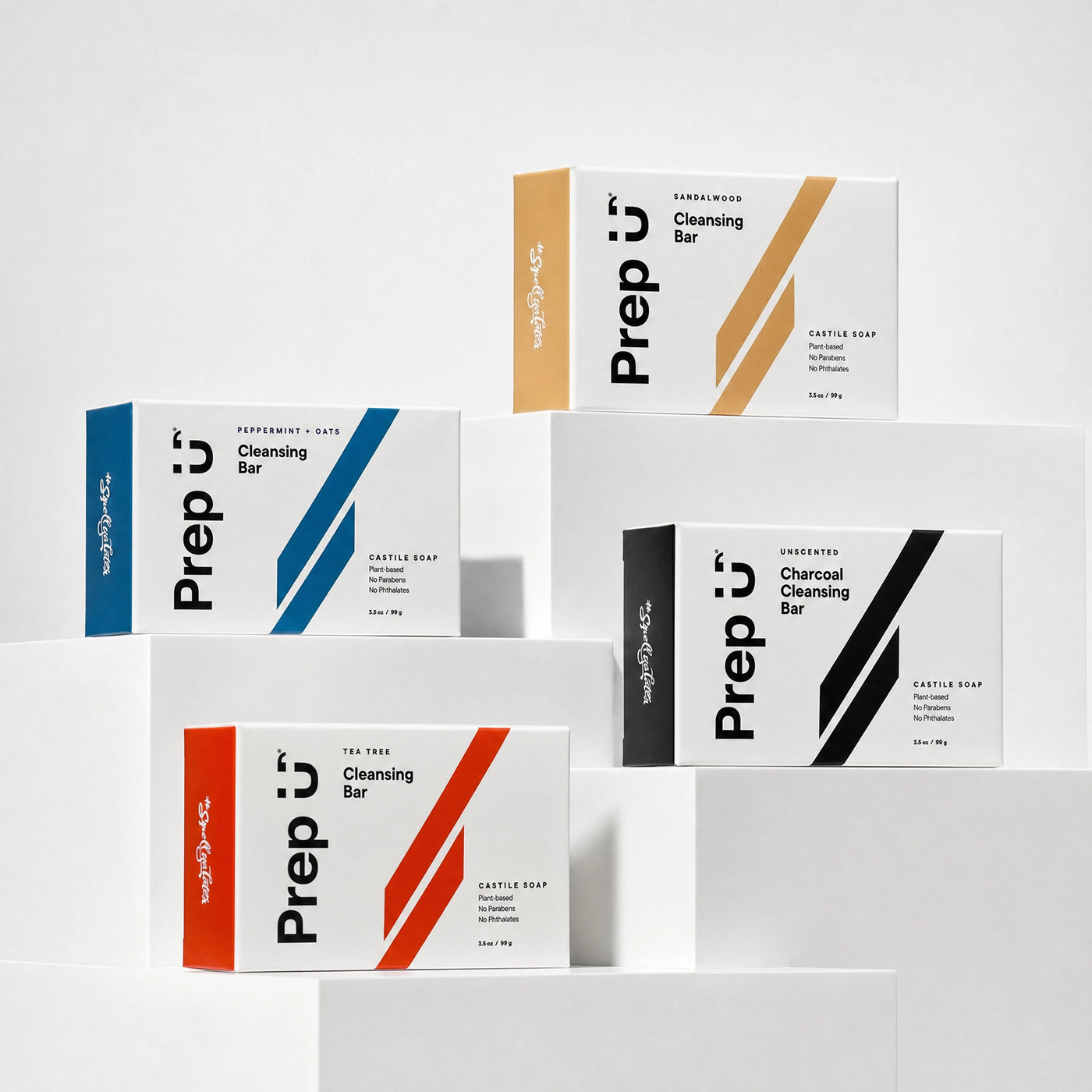
Tea Tree Oil Soap: How It Works & What to Look For
Tea tree oil soap uses concentrated melaleuca alternifolia extract to deliver antibacterial and antifungal cleansing in bar form — with effectiveness that depends almost entirely on the concentration used and the quality of the base it's carried in.
The Short Answer
- Tea tree oil (melaleuca alternifolia) contains terpinen-4-ol — a natural compound that disrupts bacterial and fungal cell membranes on contact.
- Concentration matters: too little tea tree and there's no real antibacterial effect; too much and it can irritate sensitive skin.
- The soap base matters equally — a castile base retains natural glycerin and delivers tea tree oil without stripping skin. A synthetic detergent base undoes the benefit.
- Prep U's Tea Tree Cleansing Castile Bar is SkinSAFE 91% rated — real melaleuca alternifolia, cold-processed castile, no SLS or synthetic fragrance.
- Best used daily by athletes, teens with body acne or oily skin, and anyone who sweats heavily and wants a cleanser that actually addresses the bacterial cause of odor.
What Is Tea Tree Oil Soap?
Tea tree oil soap is a cleanser — bar or liquid — that uses tea tree oil (melaleuca alternifolia) as its active botanical ingredient. Melaleuca alternifolia is a plant native to Australia; its steam-distilled leaf oil has been used for centuries as a natural antibacterial and antifungal agent. In soap form, tea tree oil is combined with a carrier base — either a plant-oil castile base or a synthetic detergent base. The quality of that base determines how well the tea tree oil works, and whether the overall product is good for daily use. The name 'tea tree oil soap' refers to the tea tree ingredient, not any relationship to tea — melaleuca alternifolia is an entirely different plant from the tea plant used in beverages.
How Tea Tree Oil Works in Soap
Tea tree oil's primary active compound is terpinen-4-ol. This compound works by disrupting the cell membranes of bacteria and fungi, breaking down their structural integrity and preventing them from functioning or reproducing. The three main mechanisms relevant to skin cleansing are: Antibacterial: Terpinen-4-ol is effective against gram-positive and gram-negative bacteria — including the bacteria responsible for body odor and surface skin infections. Regular use of a tea tree soap after workouts addresses the bacterial load that accumulates on skin during heavy exercise. Antifungal: Tea tree oil disrupts fungal cell membranes, making it relevant for conditions that arise in high-moisture, high-friction environments — common among athletes who share equipment or spend time in locker rooms. Anti-inflammatory: Tea tree oil has documented anti-inflammatory properties at the skin surface. This may support calmer skin after exercise or in acne-prone areas — though it functions as a cleanser, not a treatment. Concentration determines effectiveness. Formulas with trace amounts of tea tree oil in the final position of the ingredient list are essentially marketing — there isn't enough active compound to do anything meaningful. Look for tea tree oil appearing in the upper half of the ingredient list.
Why the Soap Base Matters as Much as the Tea Tree
Tea tree oil does its job at the skin surface during contact — but what happens to your skin after rinsing depends entirely on the base. A cold-processed castile base is made from plant oils (traditionally olive, often blended with coconut oil) that go through saponification without added synthetic detergents. The process naturally produces glycerin, which stays in the bar as a moisturizing agent. This matters for daily use: glycerin draws moisture to the skin and helps prevent the dryness and irritation that can come from frequent antibacterial cleansing. A synthetic detergent base — used in most commercial antibacterial soaps — achieves lather through sulfates (SLS, SLES) and other surfactants that strip skin oils along with bacteria. The cleansing is aggressive, and daily use on teen or sensitive skin can cause dryness, irritation, and a compromised skin barrier over time. Prep U's Tea Tree Cleansing Castile Bar is cold-processed, which means natural glycerin is retained in the bar. No SLS. No synthetic fragrance layered on top of the tea tree. The result is a genuinely antibacterial bar that doesn't trade effectiveness for skin health.
What to Avoid When Shopping for Tea Tree Oil Soap
Most tea tree soaps on the market have at least one of these problems: Too little tea tree. If tea tree oil appears near the bottom of the ingredient list (after fragrance, colorants, or preservatives), there isn't enough to have a meaningful antibacterial effect. The soap will smell like tea tree but won't function like it. Synthetic fragrance added on top. Tea tree oil has a clean, medicinal-botanical scent on its own. Brands that add synthetic fragrance are covering the tea tree smell with allergens — this raises skin sensitivity risk and signals that the formula was built for perception, not performance. Sulfate-heavy base. SLS and SLES strip skin oils effectively, which is why they create rich lather — but they also disrupt the skin barrier with daily use. A tea tree soap in a sulfate base is particularly problematic: the antibacterial properties of the tea tree don't offset the barrier damage caused by the sulfates. High-concentrate pure tea tree products. Undiluted or near-undiluted tea tree oil should not be applied directly to skin. In soap form, the oil is diluted into the base, which is why it's safe for daily use. Products that emphasize pure or maximum strength tea tree in a liquid form applied without rinsing carry higher irritation risk.
How to Use Tea Tree Oil Soap Effectively
For athletes and active teens, the most effective timing is post-workout, when bacterial load on skin is highest. Lather the bar, work it into a wash cloth or directly on skin, and let it sit for 30–60 seconds before rinsing — this gives the terpinen-4-ol adequate contact time. For daily use focused on body odor or acne-prone skin, once per day is sufficient for most people. The castile base is gentle enough for this frequency without stripping skin. For face use: while tea tree oil soap is generally safe for the face, bar soap (even castile-based) has a higher pH than a purpose-formulated face wash. Daily facial cleansing is better served by an amino acid-derived foaming face wash, which maintains skin barrier integrity more effectively at the face's natural pH. Reserve the tea tree bar for body use. Store the bar on a draining soap dish between uses — castile bars last longer and lather better when they dry out between showers.
Why Prep U
What Makes Prep U Different
Real Melaleuca Alternifolia
Tea tree oil appears in the active portion of the ingredient list — not as a trace add-in. Terpinen-4-ol concentration is high enough to do the antibacterial and antifungal work the ingredient is known for.
SkinSAFE 91% Rated
Formulated without the most common skin allergens. SkinSAFE 91% is the highest tier available for naturally scented products — verified by dermatologist-reviewed certification.
Cold-Processed Castile Base
Natural glycerin retained. No SLS, no SLES, no synthetic fragrance, no parabens. A base that supports daily cleansing without stripping the skin barrier.
Concentration That Actually Works
Many tea tree soaps use trace amounts. Prep U's castile bar uses tea tree oil at a concentration that delivers real terpinen-4-ol activity — antibacterial and antifungal, not cosmetic.
Prep U Picks
Choose the Right Prep U Bar Soap

Tea Tree Cleansing Castile Bar
SkinSAFE 91% • Cold-Processed Castile • Melaleuca Alternifolia Active
- Real tea tree oil (melaleuca alternifolia) in the active portion of the ingredient list
- Cold-processed castile base — natural glycerin retained, no SLS or synthetic fragrance
- SkinSAFE 91% rated — verified free from top skin allergens

Tea Tree Bar 3-Pack
SkinSAFE 91% • Best Value • 3 Bars
- Same Tea Tree Castile Bar formula — 3 bars
- Best per-bar value for athletes and daily users
- SkinSAFE 91% rated — no top allergens
Frequently Asked Questions
What does tea tree oil soap do?
Tea tree oil soap cleanses skin using the antibacterial and antifungal properties of melaleuca alternifolia. Its primary active compound, terpinen-4-ol, disrupts the cell membranes of bacteria and fungi — making it effective for reducing odor-causing bacteria, addressing post-workout skin buildup, and helping manage acne-prone skin on the body. It is a cleanser, not a treatment.
Is tea tree oil soap antifungal?
Yes. Tea tree oil (melaleuca alternifolia) has documented antifungal properties. Terpinen-4-ol disrupts fungal cell membranes, making tea tree soap relevant for athletes and active individuals exposed to fungal conditions through shared equipment, locker rooms, and high-moisture environments. Regular post-workout use addresses the conditions that allow surface fungal issues to develop.
Can tea tree oil soap be used on the face?
Tea tree oil soap is generally safe for facial use, but bar soap — even castile-based — has a higher pH than purpose-formulated face washes. Daily facial cleansing with bar soap can affect the skin barrier over time. For the face, an amino acid-derived foaming face wash maintains skin integrity better. Reserve tea tree oil soap for body use where the pH difference matters less.
Is tea tree oil soap safe for sensitive skin?
In a properly formulated bar — castile base, no SLS, no synthetic fragrance added on top — tea tree oil soap is appropriate for most sensitive skin types. The key is what it doesn't contain: synthetic fragrance is the most common contact allergen in personal care products, and SLS-heavy bases cause barrier disruption. Prep U's Tea Tree Castile Bar is SkinSAFE 91% rated — verified free from the top skin allergens.
How strong should tea tree oil soap be?
In rinse-off products like bar soap, effective tea tree concentration is typically 1–5%. Below that, there isn't enough terpinen-4-ol activity for a real antibacterial effect. The practical test: tea tree oil should appear in the upper half of the ingredient list — not near the bottom after fragrance and colorants.
What's the difference between tea tree oil soap and regular antibacterial soap?
Conventional antibacterial soaps use synthetic chemical agents to kill bacteria. Tea tree oil soap achieves similar antibacterial action through a natural botanical — terpinen-4-ol — without the synthetic chemistry. A castile base adds further benefit by retaining natural glycerin and avoiding the barrier-stripping effects of SLS-heavy bases common in synthetic antibacterial soaps.

