
Straight answers for parents
Body Odor in Teens: Why It Starts and What Helps
What actually causes the smell, which habits matter most, which home remedies hold up, and how to choose a first deodorant.
Shop Deodorant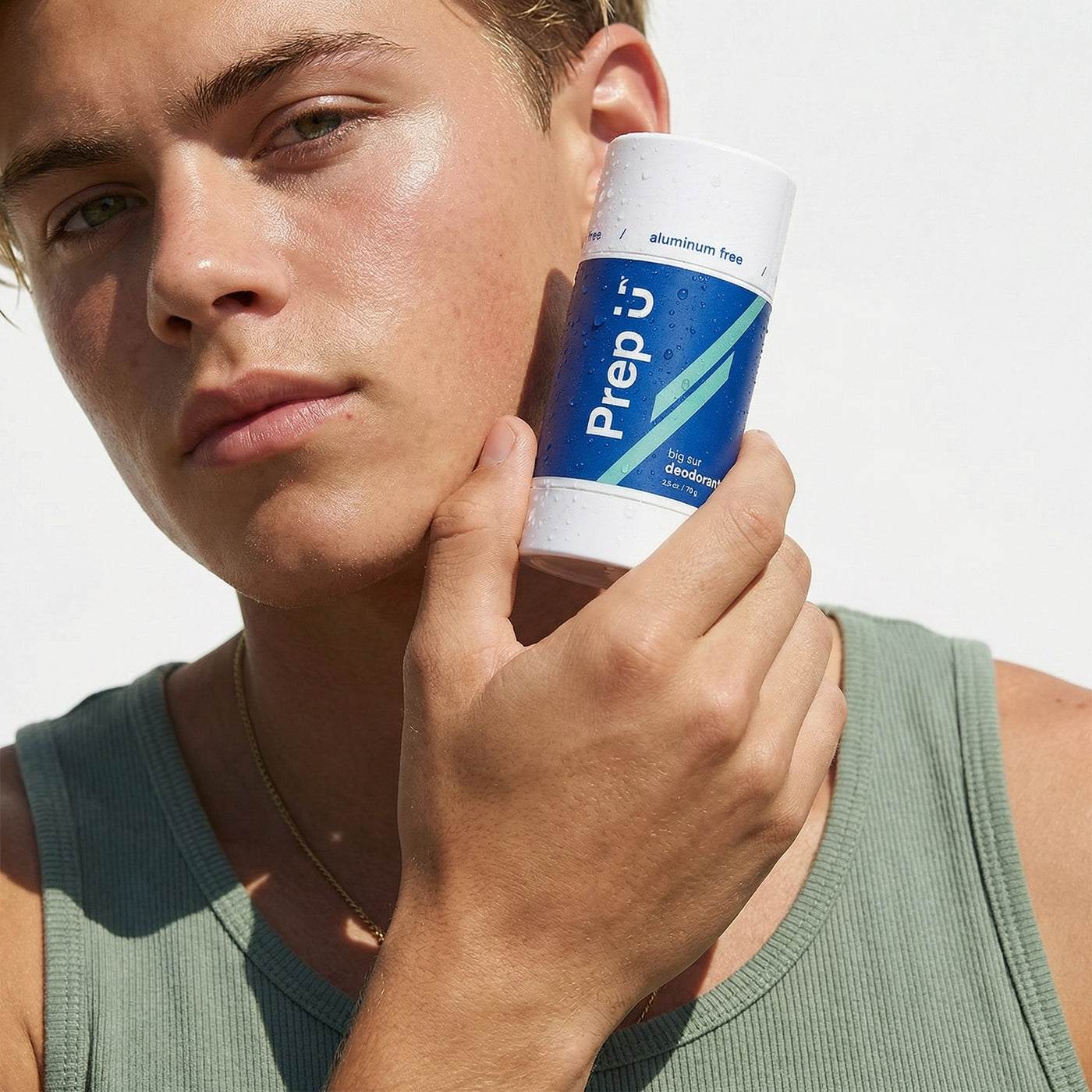
Body Odor in Teens: What Causes It and What Actually Helps
Body odor in teens starts when the underarm glands switch on at puberty and the bacteria on skin get something new to eat. It is normal, it says nothing about how clean your kid is, and for most families a few habits plus a deodorant that works cover it.
This page walks through what causes the smell, what counts as normal, which habits move the needle most, which home remedies are worth trying and which ones just sting, and how to pick a first stick. It is written for parents, and it is fine to hand to your teen.
The Short Answer
- Fresh sweat barely smells. The odor shows up when skin bacteria feed on the oily sweat from glands that wake up at puberty, usually between ages 9 and 14.
- A daily shower, fully dry skin, clean clothes and a deodorant do most of the work. Any one of them alone tends to fall short.
- Deodorant works on odor. Antiperspirant works on sweat. Prep U sticks are deodorant, so normal sweating still happens.
- Lemon juice and baking soda paste get passed around as remedies, but the results are uneven and both can sting, especially after shaving.
- A sudden change in smell, or heavy sweating that soaks through clothes or happens at night, is worth a call to your pediatrician.
Why does your teen suddenly smell different?
Because a second set of sweat glands just came online. Kids have eccrine glands all over the body from early childhood, and that sweat is mostly salt and water, which is why a seven-year-old can sprint around the yard and come back smelling like a seven-year-old. At puberty the apocrine glands in the underarms and groin start working too, and their sweat is thicker and oilier.
That oily sweat has almost no smell when it comes out. The smell arrives when the bacteria that live on everyone's skin start eating it and release stronger-smelling byproducts. The American Academy of Pediatrics describes it the same way: bacteria on the skin use those oils and release extra smells.
Hair growth in the same areas can hold onto the odor, which is a big reason it seems to show up overnight.
If you are the parent standing in a hallway wondering what happened, why your teen smells so bad is written for exactly that moment.
Is body odor caused by sweat or by bacteria?
Both, and neither smells much on its own. Sweat without bacteria is close to odorless. Bacteria without sweat have nothing to eat. The smell is what you get when the two meet in a warm, covered spot like an underarm.
That tells you where the fixes are. Soap and water wash off the oils the bacteria feed on. Clean fabric stops the smell from moving into the laundry. A deodorant handles the odor that is left, and in Prep U sticks that job falls mostly to magnesium hydroxide, which neutralizes odor instead of covering it with perfume. None of this requires sterilizing anything, and nothing you buy will make a teenager stop sweating, so the realistic goal is a kid who sweats normally and does not announce it.
When does body odor usually start, and what is normal?
Most kids notice it somewhere between 9 and 14, and a little earlier is not unusual. The first sign is rarely a birthday. It is more likely a sharp or sour smell after gym, a shirt that smells by lunch, or a sibling with an opinion.
Normal looks like odor that appears after sweating and fades after a shower. Smell from the underarms, feet and groin is expected at this stage. If you want the age question on its own, see what age boys start wearing deodorant, or deodorant for kids for the 8 to 14 range.
Which habits make the biggest difference?
Four things, roughly in order of payoff.
A real shower every day, and another after a hard practice, with soap going to the underarms, groin and feet instead of wherever the water happens to land. Then skin that is completely dry before getting dressed, because a damp underarm under a shirt is where the smell restarts. Then clean clothes: fabric holds odor long after skin is fine, and cotton or moisture-wicking layers tend to hold less than tight synthetics. Last, fresh socks every day and shoes that get a full day to air out between wears.
Most of what people spend money on sits on top of those four. For a school day mapped out hour by hour, see how to prevent odor and stay fresh all day.
The part everyone forgets: clothes, shoes and gym bags
A teen can shower perfectly and still smell, because the smell is living in the laundry. The hoodie worn three days running, the practice shirt balled up in a bag and the damp towel zipped in beside it all hold odor, and a closed, warm bag keeps it going.
Wash workout clothes after every wear and dry them all the way. Empty the bag the day it comes home. If feet are the main complaint, foot powder for teen athletes picks up where this page leaves off.
What can deodorant do, and what can't it?
Deodorant works on odor. It does not stop sweat and it is not supposed to. In the U.S., antiperspirants are regulated as over-the-counter drugs because they use aluminum salts to cut down sweat. Deodorants are cosmetics, and they do not block anything.
Prep U sticks are deodorant, so your teen will still sweat at practice and on hot days. The stick handles the smell that would otherwise follow. If a perfectly dry shirt is the goal, deodorant is the wrong tool, and we would rather say so than promise it.
Put it on clean, dry skin, two light swipes per side, once in the morning. Piling on more does not make it stronger.
Why magnesium hydroxide instead of baking soda?
A lot of natural sticks lean on baking soda for odor control. Prep U puts magnesium hydroxide ahead of it. Magnesium hydroxide is a mineral that neutralizes odor, and baking soda is the ingredient most often blamed for underarm irritation, so where each one sits on the label matters.
Here is the Unscented stick in label order: arrowroot powder, virgin coconut oil, shea butter, hydrogenated castor oil, beeswax, jojoba oil, magnesium hydroxide, sodium bicarbonate (baking soda), zinc oxide and tocopherols (vitamin E). Baking soda is in there, eighth of ten and after the magnesium hydroxide. Shea and coconut are in every stick, so check the list if anyone in your family reacts to either.
More detail in magnesium hydroxide in natural deodorant.
Does what your teen eats change how they smell?
A little, for some people. Garlic, onions and strong spices can make sweat and breath smell stronger for a day or so, and some kids notice it more than others. It is rarely the main cause in a teenager.
If the smell shifted around when a new supplement or a big diet change started, that is worth noting. Otherwise, do not begin by taking foods away. Work through the basics above first.
Do natural remedies for body odor actually work?
Some do, some are folklore, and a few can sting. Going down the usual list:
Washing well and wearing breathable clothes work, and they are the foundation. A mineral-based deodorant works on odor. Lemon juice and apple cider vinegar are acids, and acid on freshly shaved skin or a tiny nick stings. Baking soda paste is alkaline, which is the other way to irritate skin, and results with it are inconsistent. Coconut oil on its own smells pleasant, and that is about where its odor control ends; it is in our sticks as one part of a formula, which is a different job. Essential oil blends are plant-based, but plant-based is not the same as non-irritating.
One rule saves money and skin: change one thing at a time and give it a week or two, so you know what actually helped. If you are weighing a full switch, our parent's guide to natural deodorant covers it, and the switching guide covers the first couple of weeks.
What does a good routine look like, morning to night?
Morning: wash the underarms, dry them completely, deodorant, clean shirt. After school or practice: a quick rinse, or a full shower after a hard session, then a fresh shirt and an emptied gym bag. Night: shower if you skipped one. If shaving has started, do it at night, because deodorant on freshly shaved skin is the classic cause of a sting.
The whole thing takes about three minutes, which matters more than it sounds. A routine that short gets done on a Tuesday morning when everyone is late. A twelve-step one does not.
How do you talk to your teen about body odor?
Quietly, privately, and before anyone else has said it out loud. Not at the dinner table, and not right after a sibling's joke.
Tell them it is a normal part of growing up and bring a solution with you, so the news and the fix arrive together: everybody hits this stage, and here is what I picked out for you. Let them choose the scent, because a stick they like is a stick they will actually use. Skip the jokes, even the affectionate ones.
The school-day side is covered in how to smell good at school, which is written to be read by the teen.
Unscented or scented: which stick should you start with?
If your teen has reacted to fragrance before, or you are not sure, start with Unscented. It has no fragrance of any kind and no essential oils, which makes it the easy first stick. Unscented deodorant for sensitive skin explains what to look for.
If your teen wants a scent they will actually wear, Hunter (yuzu, sea salt and driftwood) is an easy pick. Pick 3 lets them mix three sticks, Unscented included, and find a favorite. Every stick is aluminum-free and paraben-free, and Prep U has been formulating for teen skin since 2017.
If it is the shower that needs help more than the underarms, body wash for body odor is worth a look.
When should you call the doctor about body odor?
Most of the time this is just puberty. Check in with your pediatrician if the smell changes suddenly or seems different from the usual sweaty smell, if your teen sweats heavily enough to soak through clothes or at night, or if odor comes with other symptoms like itching, a rash or unusual tiredness.
The American Academy of Pediatrics suggests seeing a doctor for constant or excessive sweating. Mayo Clinic notes that excessive sweating can sometimes be a sign of a more serious condition, so it is worth getting checked. A doctor can sort out the cause. Please do not try to self-diagnose from the internet, including this page.
Why Prep U
What Makes Prep U Different
Deodorant, Not Antiperspirant
No aluminum salts and nothing that blocks sweat. It works on odor and leaves normal sweating alone.
Magnesium Hydroxide Leads
Magnesium hydroxide sits ahead of baking soda on every stick's label, and it does most of the odor work.
Short Ingredient List
Arrowroot, coconut oil, shea butter, beeswax and a few minerals. If you can read the label, you can check it.
Made With Teens in Mind
Formulating for teen skin since 2017. Made for ages 8 and up, aluminum-free and paraben-free.
Prep U Picks
Choose the Right Prep U Deodorant

Unscented Deodorant
No fragrance of any kind. An easy first stick.
- No fragrance and no essential oils
- Magnesium hydroxide first, baking soda listed after it
- Aluminum-free and paraben-free

Hunter Deodorant
Yuzu, sea salt and driftwood
- Yuzu, sea salt and driftwood scent
- Same mineral base as the Unscented stick
- Aluminum-free and paraben-free

Pick 3 Deodorants: Mix & Match
Let your teen try a few scents
- Choose any three sticks
- A low-pressure way to find a favorite
- Includes the Unscented stick if you want it
Frequently Asked Questions
What causes body odor in teens?
Puberty switches on the apocrine glands in the underarms and groin, and skin bacteria break their oily sweat down into stronger-smelling compounds. The first section above has the full story, including why it can seem to arrive overnight.
At what age does body odor start?
Usually between 9 and 14, and some kids start earlier. The giveaway is the smell itself, such as a sharp or sour odor after gym or a shirt that smells by lunch. Prep U sticks are formulated for ages 8 and up, so there is one for the early end.
Why does my teen still smell after a shower?
Usually the smell is coming from fabric, not skin. Towels, a hoodie worn on repeat and last week's practice shirt all hold odor straight through a clean shower. Try one week where everything that touches skin, towel included, comes fresh from the wash. If the problem disappears, it was the laundry. A practice shirt left on the floor can undo a good shower in about an hour.
Is body odor normal for a 9 or 10 year old?
Yes. It is common, and often the first sign that puberty is starting. A daily shower, clean clothes and a deodorant made for kids usually cover it. If the change is very sudden or comes with other symptoms, mention it to your pediatrician.
How do you get rid of body odor naturally?
Manage it rather than erase it: a daily shower, fully dry skin, clean breathable clothes and a mineral-based, aluminum-free deodorant. Of the kitchen remedies, skip the lemon juice and baking soda paste, since both can sting, and change one thing at a time so you can tell what worked.
Does deodorant stop sweat?
No. Only antiperspirants reduce sweat, and they do it with aluminum salts. A deodorant works on the odor that follows, so your teen will still sweat at practice or on a hot day. If sweat itself is the problem, with shirts soaked through or sweating at night, that is a pediatrician conversation and not a product swap.
Does baking soda help with body odor?
In a deodorant it can, which is why plenty of sticks include it. Ours has it too, listed after the magnesium hydroxide. A DIY paste is a different matter: baking soda is alkaline, and rubbed on straight it can cause redness or burning, especially on freshly shaved skin.
Can food change how a teen smells?
Garlic, onions and strong spices can make sweat and breath stronger for a day or so, but food is rarely the main cause in a teenager. If you do try a diet change, make it the only change for a week or two so you can tell whether it did anything.
How often should a teen shower?
Once a day is a good default once odor starts, plus another after a hard practice or game. Twice a day with no reason can dry skin out. After gym class, a quick rinse of the underarms is a fine middle ground.
When should I see a doctor about my teen's body odor?
Call if the smell changes suddenly or seems different from the usual sweaty smell, if sweating soaks through clothes or happens at night, or if odor comes with itching, a rash or unusual tiredness. The last section above links the American Academy of Pediatrics and Mayo Clinic guidance on excessive sweating.
How do I talk to my teen about body odor?
Pick a private moment, like a car ride, and keep it short. Lead with what you bought instead of what is wrong, and let them choose the scent. Then drop it and let them take it from there.
What deodorant should a teen start with?
If your teen has reacted to fragrance before, start with an unscented stick and patch test it on the inner forearm first. Otherwise, let them pick a scent they like. Give any new stick a week or two before deciding.