
How to Teach Your Son Good Personal Hygiene Habits
Quick Answer
Boys build lasting hygiene habits when parents start before puberty hits, give a brief product walkthrough, and offer low-key daily reminders. The right products help: teens are far more likely to follow routines they actually enjoy.
Boys build lasting hygiene habits when parents start before puberty hits, give a brief practical walkthrough of each product, and offer low-key daily reminders. The right products help: teens are far more likely to follow routines they actually enjoy.
There is a well-worn path for teaching girls about personal care: magazines, friends, social media, older siblings. Boys often get a much shorter runway: a health class unit, maybe a talk with a parent, and then puberty shows up whether they are ready or not. That gap is real, and it means most practical hygiene education for tween and teen boys falls on parents. The good news: it does not have to be complicated or awkward.
What Age Should Boys Start a Hygiene Routine?
The best time to build hygiene habits is before puberty turns up the stakes, ideally between ages 8 and 10, before body odor, oily skin, and acne enter the picture. The American Academy of Pediatrics notes that early adolescence typically begins between ages 8 and 13 for boys; habits established before those changes arrive are far easier to maintain than routines introduced mid-transition. Boys who already have a reliable shower habit, brush teeth consistently, and use soap correctly find the step to deodorant and face wash much smaller. If the shower habit is not there yet, that is the place to start. One solid routine practiced consistently is worth more than a comprehensive routine introduced too late to take hold.
Puberty Hygiene for Boys: What Changes and Why
Boys need a hygiene routine update because of puberty, not just because they are getting older. At puberty, apocrine sweat glands activate in the underarms and groin, producing an oily sweat that skin bacteria convert into body odor. Sebaceous glands also increase oil production, leading to shinier, more breakout-prone skin. Boys who did not need deodorant at age 8 genuinely do need it by ages 10 to 12 in most cases, and the reason is biological, not a hygiene failure. Framing the conversation that way, explaining the actual physiology, lands much better than implying he has been doing something wrong. Puberty hygiene for boys covers five basics: daily showering with soap or body wash, natural aluminum-free deodorant on dry skin, twice-daily face washing, fresh clothes after every shower, and teeth brushing twice daily. Building those habits before puberty peaks is far easier than introducing them mid-transition. For guidance on when to introduce deodorant, see when boys should start wearing deodorant. For choosing the right formula, see the best deodorant for teenage boys.
Don't Assume He Knows What to Do or Why
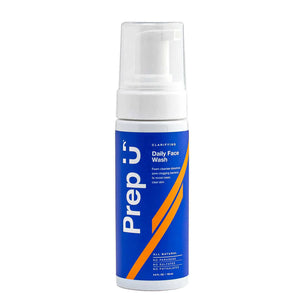
Handing a boy a product and expecting him to use it correctly is wishful thinking. Most boys need a brief, specific walkthrough, not a lecture, just a practical demonstration of what each product does and how to use it. Show him that the Daily Foaming Face Wash goes on a damp face and should be worked in gently for about 30 seconds. Demonstrate that deodorant goes on completely dry skin after a shower, not over yesterday's sweat. Explain that body wash is not optional on sport days: rinsing with water does not remove the oils and bacteria that cause odor and bacne. These walkthroughs only need to happen once or twice, but they do need to happen. Boys are not picking this up intuitively.
Give Him Products He'll Actually Use
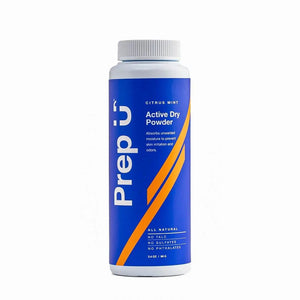
The most complete hygiene kit in the world does not help if the products sit untouched on the bathroom counter. Boys are significantly more likely to use products they actually like: the scent works for them, the texture is not off-putting, the formula does not irritate their skin. Strong synthetic fragrances and harsh formulas are common turnoffs, particularly for boys with sensitive skin. Prep U's Solstice Deodorant is formulated specifically for teen bodies, with no aluminum, no parabens, and effective odor control with a scent most boys find genuinely appealing. The Daily Foaming Face Wash cleans effectively without the tight, stripped feeling that drives teens away from face-washing routines. And for post-game freshness, Talc-Free Active Dry Powder is a product most teen boys find useful once they understand what it does. Products that are age-appropriate, effective, and pleasant to use make routines far easier to build.
Include Him in the Decisions
One of the most underrated strategies: give him some ownership. Ask him how he likes the body wash you bought, whether the deodorant scent works for him, whether he would rather try something different. Boys who feel agency over their hygiene routine are measurably more likely to follow it consistently. This approach also opens the door for low-pressure conversations about what is changing with his body and why the routine matters, without turning it into a sit-down talk he will dread. When teens feel like hygiene choices are theirs to make, within reasonable parameters, the intrinsic motivation is much stronger than when it feels imposed from the outside.
How Long Before Hygiene Habits Stick?
Research on habit formation consistently suggests four to eight weeks of consistent daily repetition before a behavior becomes automatic. For teens, who are also navigating significant neurological development during adolescence, the higher end of that range is more realistic. That means the first two months after introducing a new routine require active support: gentle daily reminders, low-key check-ins, and matter-of-fact correction when steps are skipped. "Did you put on deodorant?" on the way out the door is much more effective than a frustrated conversation after the fact. Keep the framing practical: this is just what people do to take care of themselves, same as brushing teeth. Gentle consistency, not shame, builds the lasting habits. Once the routine runs on its own, you can step back completely.
Teen Boy Hygiene Checklist: What to Cover Before Puberty
A complete daily routine for a teen boy covers these fundamentals: daily shower with soap or body wash, paying attention to underarms, groin, back, and feet; deodorant applied to dry skin after showering; face wash morning and night; fresh clothing and athletic gear after every sweat session; teeth brushing twice daily. Weekly additions: washing sheets, exfoliating if skin is oily or acne-prone, and laundering all athletic equipment. The goal is not an elaborate routine. It is a simple one executed consistently. Starting that checklist conversation before puberty rather than during it gives you a much calmer runway, and gives him the habits he will carry forward for years.
Last reviewed July 2026 by the Prep U team.
*Information on this site is intended for educational and informational purposes only. Any information on this site is not intended to make claims to any unique individual and/or experience.