
Why Your Feet are Sweaty and How to Keep Odor Under Control
Quick Answer
Teen feet smell because they have more sweat glands per inch than almost anywhere else on the body, and shoe-trapped moisture lets odor-causing bacteria multiply rapidly. Daily washing, talc-free dry powder, and rotating footwear break the cycle.
Teen feet smell because they have more sweat glands per inch than almost anywhere else on the body, and shoe-trapped moisture lets odor-causing bacteria multiply rapidly. Daily washing, talc-free dry powder, and rotating footwear break the cycle effectively.
If your son's sneakers could clear a room, you're not alone. Foot odor is one of the most common hygiene complaints among parents of teen boys — and it's not just about shower frequency. The feet are genuinely one of the sweatiest parts of the human body, and when sweat meets the wrong conditions, odor follows fast. Understanding why it happens makes it straightforward to stop.
Why Teen Feet Sweat So Much
The soles of the feet contain roughly 125,000 sweat glands — more sweat glands per square centimeter than almost anywhere else on the body. That density serves a purpose: sweating regulates body temperature and helps flush surface impurities. But feet spend most of their time enclosed in shoes and socks, which means sweat has nowhere to evaporate. It soaks into fabric, builds up in shoe lining, and creates a warm, moist environment. During puberty, androgens (male hormones) surge and directly increase overall sweat production — which is why teen boys sweat more noticeably than younger kids, and why foot odor often becomes a problem around ages 11–14 even with consistent hygiene habits.
What Actually Causes the Smell
Sweat itself is odorless — the smell comes entirely from bacteria. Skin is naturally home to a wide range of bacteria, most of which are harmless under normal conditions. But when moisture levels rise, as they do in an enclosed shoe, bacteria multiply rapidly. They feed on sweat and dead skin cells, breaking them down into isovaleric acid and other short-chain fatty acids — and those acids produce the characteristic foot odor. Brevibacterium (the same genus responsible for some pungent cheeses) is among the key contributors. The longer feet stay warm and moist, the more bacteria proliferate and the stronger the odor becomes. The two main levers: reduce moisture and reduce the bacterial population.
How to Wash Feet Properly
Simply standing in the shower isn't enough to remove odor-causing bacteria — they cling to skin, especially between the toes and on the soles, and need to be physically washed off. Use a real body wash like Prep U's Plant-Based Castile Body Wash and scrub the tops, soles, and between every toe deliberately. Pay particular attention to the spaces between toes, where moisture concentrates and bacteria are most dense. After washing, dry feet completely — especially between the toes — before putting on socks. Residual moisture left after toweling creates exactly the environment bacteria need to start multiplying again. Daily washing matters most during hot weather, after sports, and whenever feet have been in closed shoes for extended periods.
Managing Moisture in Shoes and Socks
Keeping feet and footwear as dry as possible is the second key strategy for odor control. Socks made from natural fibers — cotton, wool, or bamboo — absorb moisture better than synthetic materials like polyester, which trap heat and keep feet wetter longer. Change socks daily at minimum; for active boys during sports season, changing mid-day after practices or PE makes a meaningful difference. When at home, going barefoot or wearing open-toed footwear lets the skin breathe and moisture evaporate. Wearing the same pair of athletic shoes every day without giving them time to dry is one of the most common causes of persistent foot odor — shoes become saturated with bacteria and moisture that reinfect clean feet immediately after washing.
Using Dry Powder for Foot Odor Control
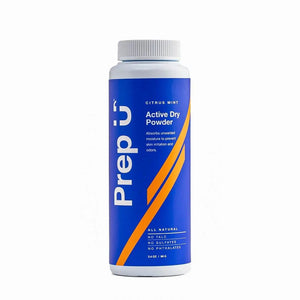
A talc-free dry powder is one of the most effective practical tools for controlling foot odor before it starts. Prep U's Active Dry Powder uses arrowroot powder and corn starch — both plant-derived — to absorb moisture at the source, keeping the warm, damp environment that bacteria need from forming in the first place. Dust it on the soles of the feet before putting on socks, or shake a small amount inside the shoe before wearing. Unlike synthetic or talc-based powders, it's free of aluminum and synthetic fragrance. Moisture control at the source is more effective than masking odor after it has already formed, which is why dry powder used proactively outperforms odor-masking sprays applied after the fact.
Shoe Hygiene: Why Rotation Matters
Shoes absorb sweat and bacteria session after session, and without time to dry out, they become a persistent reservoir that recontaminates feet even after thorough washing. Rotating between at least two pairs of shoes — rather than wearing the same pair every day — gives each pair 24 hours to dry out completely between wearings. Storing shoes in an open space (not a closed gym bag or locker) accelerates drying. For athletic shoes worn during heavy activity, removing the insoles after practice and letting them air out separately makes a meaningful difference, since insoles absorb the majority of foot sweat. Shoes that remain persistently damp even with rotation can be lightly treated with baking soda left overnight, then tapped out before wearing.
Does Foot Odor Indicate a Medical Problem?
In the vast majority of cases, teen foot odor is a normal result of high sweat gland density and shoe-enclosed moisture — not a sign of any underlying condition. However, persistent foot odor that doesn't improve with consistent hygiene, or odor accompanied by cracking skin between the toes, itching, or white patches, may indicate athlete's foot (tinea pedis) — a fungal infection common in teens who share showers at gyms or pools. If the odor is unusually sharp or ammonia-like, or if there's skin breakdown that isn't healing, those are worth a conversation with a pediatrician or dermatologist. Otherwise, the hygiene approach above addresses the vast majority of teen foot odor cases effectively.
Foot odor in teen boys is common, but it's not something families just have to live with. Clean feet, completely dry toes after washing, moisture-absorbing dry powder, natural-fiber socks, and rotating footwear cover most of the problem. Build these habits early and they'll carry into adulthood without much thought.
Last reviewed June 2026 by the Prep U team.
*Information on this site is intended for educational and informational purposes only. Any information on this site is not intended to make claims to any unique individual and/or experience.
For more, see our guide to the deodorant for active teen boys.