
The Ingredients I Trust for My Own Teens—And Why
Quick Answer
Knowing which ingredients to trust in teen personal care products comes down to two lists: what to actively look for and what to consistently avoid. Here's the breakdown that makes label-reading fast and reliable.
Knowing which ingredients to trust in teen personal care products comes down to two lists: what to actively look for and what to consistently avoid. Here's the breakdown that makes label-reading fast and reliable.
Teen skin changes dramatically between ages 9 and 16 — and not just in surface ways. The products that go on skin during these years get absorbed into a body that's in the middle of one of its most significant developmental phases. Choosing ingredients thoughtfully during this window matters more than it does at any other point in your child's life.
Why Ingredient Choices Matter More During Puberty
Teen skin is physiologically different from adult skin in several important ways. Puberty hormones — specifically androgens — significantly increase sebum (oil) production, which is why pores clog more easily and breakouts become common starting around age 9–12. At the same time, adolescent skin has a more permeable barrier than mature skin, meaning topical ingredients absorb more readily. This combination — higher absorption rate plus heightened hormonal sensitivity — makes the teen years the worst time to introduce ingredients classified as endocrine disruptors, common sensitizers, or barrier-stripping detergents. Research from the American Academy of Pediatrics supports minimizing adolescent exposure to synthetic chemicals in personal care products, particularly during the most active developmental window. The choice of ingredients in your teen's daily deodorant, body wash, and face wash is a real health decision — not just a cosmetic one.
Ingredients Worth Avoiding: The Short List
A handful of ingredient categories account for most of the concern in conventional teen personal care. Parabens (methylparaben, ethylparaben, propylparaben, butylparaben) are synthetic preservatives that mimic estrogen and have been detected in human tissue — classified as endocrine disruptors by multiple regulatory bodies. Sulfates — sodium lauryl sulfate (SLS) and sodium laureth sulfate (SLES) — are petroleum-derived foaming agents that strip the skin's acid mantle, triggering the compensatory oil overproduction that worsens breakouts in already-oily teen skin. Phthalates hide under the label term "fragrance" or "parfum" and are endocrine-disrupting fragrance stabilizers that interfere with testosterone and estrogen signaling. Denatured alcohol (SD alcohol, alcohol denat.) is intensely drying and disrupts the skin barrier, creating the same rebound-oiliness cycle as sulfates. Avoiding these four categories eliminates the vast majority of synthetic chemical concern in teen personal care.
Ingredients That Actually Work for Teen Skin
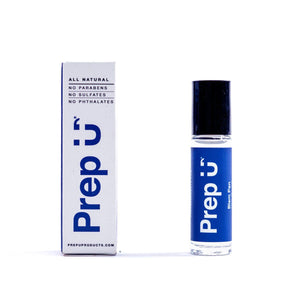
Every function a synthetic ingredient performs has a cleaner plant-derived or mineral alternative. Activated charcoal (derived from coconut shells or bamboo) works through adsorption — its extremely high surface area physically binds to excess oil, bacteria, and skin impurities and pulls them out — without the barrier disruption of harsh detergents. Tea tree oil (Melaleuca alternifolia) provides broad-spectrum antibacterial and anti-inflammatory activity relevant for both acne-prone facial skin and post-workout body care. Jojoba oil (Simmondsia chinensis) is a liquid wax ester structurally similar to the skin's own sebum, making it non-comedogenic and genuinely effective at skin conditioning. Witch hazel (Hamamelis virginiana) is a natural astringent that reduces inflammation and tightens pores, used in targeted blemish treatments like Prep U's Blem Pen. These aren't compromise ingredients — they're the right tool for teen biology.
How to Read a Label in Under Two Minutes
Ingredient lists are ordered by concentration — the first five to ten ingredients form the bulk of the formula, so start there. If the top ingredients are water, plant oils with recognizable botanical names, and mineral compounds, that's a strong signal. Red flags: sodium lauryl sulfate (stripping), any "-paraben" suffix (endocrine concern), "fragrance" or "parfum" as a standalone entry (phthalate source), and "SD alcohol" or "alcohol denat." (barrier disruptor). Third-party systems like SkinSAFE — used by dermatologists and allergists to evaluate products against common sensitizers — provide the fastest independent verification. A 91% SkinSAFE score (scented formulas) or 100% (unscented) means an independent body has confirmed the absence of the most common problematic ingredients. That's more informative than any front-of-label marketing claim.
Natural Deodorant for Teens: What Actually Controls Odor
Teen body odor is caused by bacteria on skin metabolizing sweat — specifically in the underarm area where apocrine glands produce protein-rich sweat that bacteria thrive on. Controlling odor means neutralizing those bacteria, which can be accomplished without blocking sweat glands. Magnesium (magnesium hydroxide) creates an alkaline microenvironment on skin that odor-causing bacteria can't survive in. Zinc oxide adds antibacterial and skin-soothing properties. Arrowroot powder and corn starch absorb surface moisture to reduce the conditions bacteria need. Prep U's Solstice Deodorant uses this Active Mineral & Botanical Blend — rated 91% SkinSAFE for scented and 100% for unscented formulas — to address odor effectively without aluminum compounds, synthetic fragrance, or parabens. Most teen boys don't need to block sweat; they need to manage odor. These ingredients do exactly that.
Building a Simple, Effective Routine
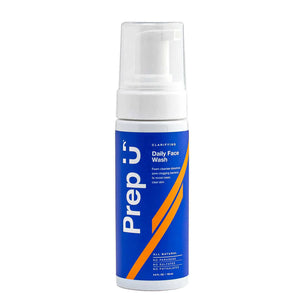
The best teen skincare routine is one simple enough to actually happen every day. Morning: a gentle plant-derived cleanser to remove overnight oil buildup — Prep U's Daily Foaming Face Wash uses coconut-derived surfactants that clean without stripping. Deodorant applied to clean, dry underarms. Evening: repeat face wash after school or practice. Twice weekly: exfoliation with an activated charcoal scrub like Prep U's Exfoliating Charcoal Face & Body Scrub to remove dead skin cells and clear pores before they clog. The goal isn't an elaborate regimen — it's consistent execution of three to four steps that address the actual demands of teen skin: daily oil control, bacteria management, and gentle exfoliation. Fewer products used consistently outperform more products used sporadically.
Choosing ingredients you trust is ultimately about doing the background work once so you can shop confidently every time. Short lists, recognizable botanical names, and independent SkinSAFE verification are the three fastest filters for any product you're considering for your teen.
Last reviewed June 2026 by the Prep U team.
*Information on this site is intended for educational and informational purposes only. Any information on this site is not intended to make claims to any unique individual and/or experience.
For more, see our guide to the natural deodorant for boys.