
Not all Sweat is Created Equal
Quick Answer
Eccrine sweat is odorless and cools the body; apocrine sweat — produced in hair-bearing areas — mixes with bacteria to create body odor. Puberty sharply increases apocrine activity, which is why teen boys need a deodorant routine and why natural deodorant works by neutralizing bacteria, not blocking sweat.
Not all sweat smells — eccrine sweat is odorless and cools the body through evaporation, while apocrine sweat, produced in hair follicles in the armpits and groin, mixes with skin bacteria to create body odor. Teen boys experience a sharp increase in apocrine activity during puberty. Understanding the difference between the two types of sweat is the foundation for managing odor and moisture effectively — and for understanding why natural deodorant works the way it does.
Two types of sweat: eccrine (odorless) vs. apocrine (the smelly one)
The human body contains approximately two to four million sweat glands of two distinct types. Eccrine glands are distributed across most of the body's surface — forehead, palms, soles of the feet, torso — and produce clear, odorless fluid directly onto the skin to regulate body temperature through evaporation. Eccrine sweat itself has no odor; the sensation of being sweaty is uncomfortable, but it doesn't smell. Apocrine glands are located specifically in hair-bearing areas — underarms, groin, and scalp — and produce a thicker, protein-rich fluid that opens into hair follicles rather than directly onto the skin surface. When apocrine sweat is metabolized by the bacteria that naturally live on skin, it produces the volatile organic compounds responsible for body odor. The smell isn't the sweat itself — it's a byproduct of bacterial activity on the apocrine secretion.
Why puberty makes sweat smell so much stronger
Before puberty, apocrine glands are largely inactive. The onset of puberty — driven by hormonal changes that begin roughly between ages 8 and 12 in boys — triggers apocrine gland activation and significantly increases their secretory activity. This is why most children don't have noticeable body odor, and why teen boys can seem to develop it almost overnight. The surge in androgens during puberty increases both the volume of apocrine secretion and the richness of the proteins it contains, giving skin bacteria more material to metabolize. Apocrine glands in the underarms also increase in size during puberty, producing more secretion per gland than they did in childhood. The result is a significant increase in the substrate for bacterial odor production — which is why puberty is the right time to establish a deodorant routine, not wait until there's a problem.
Where apocrine glands are — and why those spots need extra attention
Apocrine glands are concentrated in four main areas: the underarms (axillae), the groin and genitals, the perianal region, and the scalp. These are the areas where bacterial activity converts apocrine secretions into odor-causing compounds — and where standard hygiene attention needs to focus. The underarms get the most attention because they're socially visible, but groin hygiene is equally important and often underaddressed in teen routines. Daily showering with a thorough cleanse — not just a rinse — in these areas removes accumulated apocrine secretion and bacteria before they produce odor. Prep U's Solstice Body Wash uses plant-based cleansers that remove bacteria and sebum without synthetic fragrance that could irritate sensitive apocrine-rich areas. For the underarms specifically, a natural deodorant applied after showering provides ongoing odor neutralization through the day.
How natural deodorant addresses apocrine-related odor
Natural deodorant and antiperspirant work through fundamentally different mechanisms. Antiperspirant uses aluminum-based compounds to physically plug sweat ducts and reduce secretion — temporarily blocking the gland's output. Natural deodorant doesn't block sweat; it neutralizes the bacteria that convert apocrine secretions into odor-causing compounds. Prep U's Solstice Deodorant uses magnesium and zinc oxide — both part of the Active Mineral & Botanical Blend — to create an environment on the skin's surface where odor-causing bacteria are less active, while arrowroot and corn starch absorb moisture to reduce the conditions that support bacterial growth. The scented Solstice formula is rated 91% SkinSAFE. For boys who run particularly warm, Prep U's Carbon Deodorant adds activated charcoal for an extra layer of absorption and is also rated 91% SkinSAFE. Natural deodorant works best applied to clean, dry skin immediately after a shower — when the bacterial load is at its lowest.
Why body powder helps where deodorant can't reach
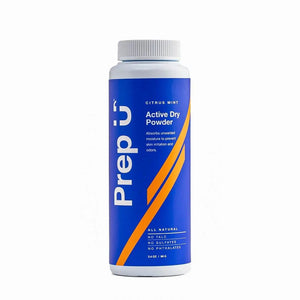
Deodorant addresses underarm odor, but eccrine sweat — the odorless kind — causes discomfort and chafing in areas where apocrine glands aren't the issue: inner thighs, feet, and the groin area. These spots accumulate eccrine moisture under clothing and athletic gear, creating friction and damp conditions that allow bacteria and odor to develop over time. Prep U's Talc-Free Active Dry Powder uses corn starch and arrowroot to absorb excess moisture in these areas, reducing both the physical discomfort of chafing and the bacterial conditions that develop in persistently damp skin. Deodorant and body powder are complementary tools: deodorant manages apocrine odor in hair-bearing areas, while powder manages eccrine moisture buildup everywhere else.
Can you reduce sweating naturally?
Eccrine sweating is a physiological cooling mechanism — the body's primary way of preventing overheating — and it isn't possible or desirable to stop it. What's manageable is the bacterial environment that makes apocrine sweat odorous, and the moisture accumulation that makes eccrine sweat uncomfortable. Daily thorough cleansing of apocrine-rich areas removes the bacterial substrate. Natural deodorant neutralizes bacteria on the underarm surface through the day. Body powder absorbs eccrine moisture in high-chafe areas. Wearing breathable, moisture-wicking fabrics reduces the amount of eccrine sweat that stays in contact with skin. And staying well hydrated helps regulate eccrine output more efficiently — dehydration causes the body to work harder to cool itself, often producing more concentrated sweat. The goal isn't less sweating: it's a clean, managed environment where sweat doesn't become a problem.
Teen boys sweat more during puberty than at any earlier stage of life — and that's entirely normal. Understanding the two types of sweat and addressing each with the right tools makes the whole thing manageable and keeps odor and discomfort from getting in the way.
Last reviewed June 2026 by the Prep U team.
*Information on this site is intended for educational and informational purposes only. Any information on this site is not intended to make claims to any unique individual and/or experience.
For more, see our guide to the best deodorant for teenage boys.