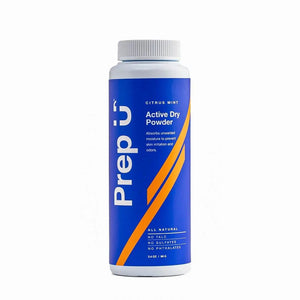

Benefits of Active Dry Powder
Quick Answer
Body powder absorbs eccrine moisture in high-friction areas (inner thighs, feet, underarms) that deodorant doesn't address. A talc-free formula with corn starch and arrowroot is safe for daily use and prevents chafing and odor in areas where active teen boys sweat most.
Body powder benefits for teen boys include moisture absorption, chafing prevention, and odor control in areas where sweat accumulates — underarms, inner thighs, and feet. A talc-free formula made with corn starch and arrowroot works effectively without the health concerns linked to talcum-based powders. Here's what active dry powder actually does, who it's for, and where it fits in a teen boy's daily hygiene routine.
What does body powder actually do?
Body powder works by absorbing excess moisture from the skin's surface and reducing the friction that builds up between skin and clothing — or between two areas of skin in contact. At the microscopic level, finely milled starch particles (corn starch, arrowroot) absorb sweat before it can accumulate, keeping skin dry rather than allowing moisture to pool and create the damp conditions that cause chafing, irritation, and bacterial odor. Unlike a deodorant or body wash, powder doesn't cleanse or neutralize bacteria directly — its job is moisture management. A dry skin surface is less hospitable to bacterial growth, which is why powder reduces odor over time even without antimicrobial ingredients. For boys in puberty who are physically active and who sweat more than at any earlier stage of life, moisture management in high-friction areas is as important as odor control in the underarms.
Why teen boys specifically benefit from active dry powder
The eccrine sweat glands that regulate body temperature become more active during puberty, producing more sweat per day than in childhood. For teen boys — especially those who are physically active, live in warm climates, or wear athletic gear that traps heat — this increase in eccrine output creates real friction and moisture problems that deodorant alone doesn't solve. Body powder benefits are most evident in four areas: the inner thighs (where skin-on-skin friction during activity causes chafing), the feet (where sweat accumulates inside socks and shoes), the underarms as a complement to deodorant on high-activity days, and the groin area (where moisture buildup under clothing is a common source of discomfort for active boys). A light dusting of talc-free powder in these areas after a shower creates a dry barrier that lasts through a full day of school and sports.
The case against talc: why the formula matters
Traditional body powders used talcum — a naturally occurring mineral — as the active moisture-absorbing ingredient. Talc-based powders have faced significant scrutiny: the International Agency for Research on Cancer (IARC) has classified talc applied to the perineal region as possibly carcinogenic to humans, and ongoing research has brought renewed attention to the risks of long-term talc use on sensitive skin areas. For teen boys using body powder regularly over years, a talc-free alternative is the prudent choice. Prep U's Talc-Free Active Dry Powder uses corn starch and arrowroot as the primary absorbing agents — both plant-derived starches that absorb moisture effectively without any of the concerns associated with talcum. The formula is free from talc entirely, making it appropriate for long-term, daily use.
Where to use body powder and how much
Active dry powder is designed for areas where sweat accumulates and friction occurs — not the face or areas where a cleanser is the right tool. The most effective application points for teen boys are: the underarms (as a complement to deodorant on high-activity days), inner thighs (before sports or any activity involving running), feet (inside socks, on the soles, inside shoes), and the back and waist area for boys who carry a backpack that creates friction. The right amount is a light dusting — a small application spread gently over the area. Too much creates a cakey residue that can clump under clothing. Apply after a shower while skin is completely dry: powder on damp skin clumps and doesn't absorb effectively. A light, even coat on clean dry skin is all that's needed.
Body powder vs. deodorant: different jobs, both necessary
Body powder and deodorant address different problems and work best used together rather than as alternatives. Deodorant — specifically natural deodorant like Prep U's Solstice Deodorant — targets the apocrine sweat glands in the underarms by neutralizing the odor-causing bacteria that metabolize apocrine secretions. It's designed for the underarms and works through direct skin contact. Body powder manages eccrine moisture (the odorless sweat that cools the body) in areas where deodorant can't or shouldn't be applied: inner thighs, feet, shoes, and general high-friction areas. In practice, the routine is simple — deodorant on the underarms after showering, powder on the high-friction areas before getting dressed. Together they cover the full range of sweat and moisture management that active teen boys need.
Active dry powder is a straightforward, underused tool in teen hygiene. It takes under a minute to apply, lasts the full day, and solves the chafing and moisture problems that body wash and deodorant alone can't address. For active boys who deal with any amount of friction or moisture during the day, it earns a permanent spot in the routine.
For a complete guide to how active dry powder works, what each ingredient does, and where to use it, see the Active Dry Powder Guide.
Last reviewed June 2026 by the Prep U team.
*Information on this site is intended for educational and informational purposes only. Any information on this site is not intended to make claims to any unique individual and/or experience.