
Taming the Teenage Skin Beast
Quick Answer
Teen skin overproduces oil during puberty because androgens directly stimulate the sebaceous glands — leading to shine, clogged pores, and breakouts. A gentle cleanser used twice daily addresses the root cause more effectively than harsh acne washes.
Teen skin breaks out because of hormonal changes, not poor hygiene. Understanding what's actually happening under the surface makes it easier to build a routine that works — and to stop wasting money on products that don't.
Puberty triggers an increase in androgens — hormones that stimulate the sebaceous glands to produce more oil. That oil (sebum) is supposed to protect and moisturize the skin, but when production goes into overdrive, it combines with dead skin cells inside pores and creates the conditions for bacterial growth. That's what a pimple is: a clogged, infected pore. Managing teen skin means interrupting that cycle without making it worse.
Why Most Teens Make Their Skin Worse Before They Make It Better
The most common mistake: using harsh, stripping products. Scrubbing aggressively, using alcohol-based toners, or washing your face four times a day feels like you're fighting the oil. But stripped skin responds by producing more oil — a rebound effect that leaves you worse off than before. The second most common mistake: using adult skincare products at adult concentrations. A 10% benzoyl peroxide treatment designed for adult skin with a fully developed barrier is too aggressive for teen skin. Same with many prescription-strength retinoids. Teen skin responds better to gentler formulas at lower active concentrations, used consistently.
The Three Things That Actually Work
1. A Sulfate-Free Cleanser, Twice Daily
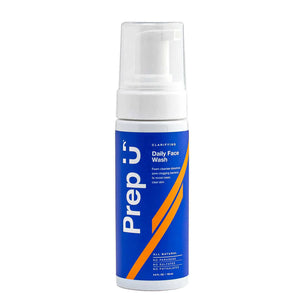
Washing your face twice a day — morning and night, or after exercising — with a gentle, sulfate-free cleanser removes the surface oil and bacteria that contribute to breakouts. Sulfate-free matters because sulfated cleansers strip the moisture barrier, triggering the oil rebound described above. This single step, done consistently, handles the majority of teen skin management. Prep U's cleansers are formulated sulfate-free and fragrance-free specifically for teen skin.
2. A Non-Comedogenic Moisturizer
Oily skin still needs moisture. "Non-comedogenic" means formulated not to clog pores — look for this on the label. A lightweight gel or lotion applied after cleansing keeps the moisture barrier intact and reduces the rebound oil production that happens when skin is stripped. Skip the moisturizer and your skin overcompensates. Use a heavy cream and you clog pores. A non-comedogenic lightweight formula is the middle path that works.
3. Targeted Treatment for Active Breakouts
For pimples that are already there, a targeted treatment applied directly to the spot works better than applying treatment across your whole face. Salicylic acid (0.5–2%) dissolves the buildup inside pores and works particularly well for blackheads and whiteheads. Benzoyl peroxide (2.5–5%) kills the bacteria responsible for inflammatory acne (red, raised pimples). Use one — not both at the same time — and apply to the spot rather than the entire face.
The Weekly Exfoliation Add-On
Dead skin cells accumulate faster during puberty and contribute to clogged pores. Exfoliating once or twice a week — with a gentle physical scrub or a chemical exfoliant like glycolic acid — removes that buildup before it causes problems. More than twice a week is over-exfoliation, which damages the skin barrier and increases sensitivity. Prep U's Exfoliating Charcoal Face & Body Scrub handles exfoliation and pore-clearing in one step, which keeps the routine efficient.
What the Beast Actually Is
The "teenage skin beast" isn't something you conquer with the right miracle product. It's a biological process running on hormones that will eventually stabilize on its own — usually by the late teens or early twenties. What you're doing with a skincare routine is managing it in the meantime: reducing the frequency and severity of breakouts, preventing the kind of scarring that's harder to address later, and keeping your skin barrier healthy enough to function properly. A consistent, simple routine with the right products does that. A complicated routine with too many products or too many active ingredients usually doesn't.
One More Thing: Diet and Sleep
High-glycemic foods (white bread, sugary drinks, processed snacks) spike insulin, which in turn spikes androgen production — the same hormones that drive oily skin. This connection isn't strong enough to mean that eating one cookie causes a breakout, but a consistent high-glycemic diet does appear to worsen acne in some teens. Sleep deprivation raises cortisol, which also triggers oil production. Neither of these is fully in your control as a teen, but it's worth knowing that skincare products are only part of the picture.
Disclaimer: The information on this site is intended for educational and informational purposes only. Any information on this site is not intended to make claims to any unique individual and/or experience.
For more, see our guide to the teen face care guide.