
Debunking Teen Acne Myths: Why Natural Solutions Actually Work Better
Quick Answer
Most conventional advice on teen acne recommends more aggressive treatment. The evidence points the other way: gentler, consistent care produces better results and fewer side effects for developing skin.
Most conventional advice on teen acne recommends more aggressive treatment — stronger chemicals, harsher scrubs, higher concentrations. The evidence points the other way: gentler, consistent care produces better results and fewer side effects for developing skin.
If your teen has tried the strongest face wash on the shelf and things are still getting worse, this is likely why. Teen acne has a specific biology, and the ingredients that seem most powerful often interfere with the very processes that clear skin needs.
Myth 1: Harsher Treatment Means Faster Results
This myth persists because it feels logical: if you're trying to remove oil and bacteria, using the strongest possible cleanser should work best. The problem is that teen skin doesn't respond that way. When harsh sulfate-based cleansers or alcohol-heavy toners strip the skin's acid mantle — the protective film maintaining skin at pH 4.5 to 5.5 — the skin interprets it as a threat and responds by overproducing oil to compensate. More oil means more clogged pores and more acne, not less. Dermatologists increasingly document this rebound cycle in teen patients who over-treat. The correct approach is gentle, consistent daily cleansing that removes excess oil and bacteria without triggering the skin's compensatory response — which plant-derived surfactants like cocamidopropyl betaine achieve without the stripping effect of sodium lauryl sulfate.
Myth 2: Natural Products Aren't Strong Enough for Teen Acne
This myth confuses "gentle" with "ineffective." Activated charcoal — derived from coconut shells or bamboo through a high-temperature activation process that creates an extremely porous structure — works through adsorption: its surface area binds to excess oil, bacteria, and skin impurities and physically draws them out of pores. Unlike benzoyl peroxide or high-concentration salicylic acid, which work by chemically drying out the skin and can cause peeling and irritation, charcoal-based cleansing removes impurities without barrier disruption. Tea tree oil (Melaleuca alternifolia) provides broad-spectrum antibacterial activity against Cutibacterium acnes — the bacteria most associated with inflammatory teen acne — and has been documented in peer-reviewed studies as effective for mild-to-moderate acne. Prep U's Exfoliating Charcoal Face & Body Scrub uses activated charcoal for this deep-cleansing mechanism without harsh synthetics.
Myth 3: Skin That Feels Tight After Washing Is Clean Skin
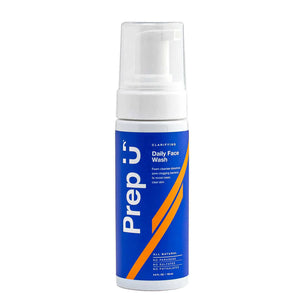
The tight, squeaky-clean feeling after using a harsh face wash isn't cleanliness — it's barrier damage. That sensation indicates the acid mantle has been disrupted and the skin's surface is temporarily desiccated. For teen boys already dealing with puberty-driven excess sebum, this triggers the compensatory oil surge that clogs pores within hours of washing. Clean skin should feel comfortable and neutral after washing — not tight, not oily, not dry. A gentle foaming cleanser using plant-derived surfactants achieves this: it removes the day's accumulated oil, sweat, and environmental pollutants while leaving the skin's natural barrier intact. Prep U's Daily Foaming Face Wash is built on this principle — effective daily cleansing with coconut-derived cleansers that leave skin feeling clean without the tight, stripped sensation that predicts rebound breakouts.
Why Teen Skin Responds Differently Than Adult Skin
Teen acne has a distinct hormonal driver that adult acne typically doesn't. Puberty androgens — primarily testosterone and dihydrotestosterone (DHT) — dramatically increase sebaceous gland activity, enlarging pores and significantly increasing oil output. This is why teen boys experience acne at rates far exceeding their pre-puberty and adult selves. Treatments effective for adult acne — which is often driven by stress hormones or slower cell turnover — may not be optimally targeted for teen biology. The most effective approach for hormonally-driven teen acne focuses on: gentle daily cleansing to prevent excess oil buildup, regular gentle exfoliation (2–3 times weekly) to prevent dead skin cells from trapping oil in pores, and targeted antibacterial treatment for active breakouts without triggering the skin's compensatory oil response.
What a Natural Acne Routine Actually Looks Like
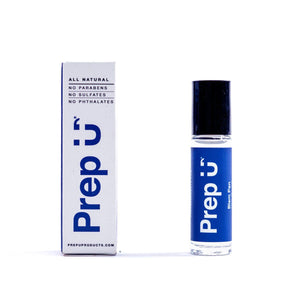
An effective natural acne routine for teen boys has three elements. Daily cleansing: a gentle foaming face wash morning and evening, and after any significant sweating. The cleanser should remove excess oil and surface bacteria without stripping — which coconut-derived surfactants accomplish cleanly. Exfoliation: 2–3 times per week with an activated charcoal scrub, which clears dead skin cells and excess oil from pore openings before they block. This is the maintenance step that prevents new breakouts rather than just treating existing ones. Spot treatment: a targeted blemish pen applied directly to active breakouts. Prep U's Blem Pen uses witch hazel (Hamamelis virginiana) as its active astringent — a natural anti-inflammatory that reduces the redness and swelling of active pimples without the peeling and dryness of synthetic spot treatments.
What to Look for in Clean Acne-Targeted Products
When evaluating any product for teen acne, three ingredient signals separate genuinely clean options from conventional ones in natural packaging. First: the cleansing surfactants. Cocamidopropyl betaine and decyl glucoside (both coconut/corn-derived) are effective and gentle; sodium lauryl sulfate (SLS) triggers the rebound cycle. Second: the exfoliating mechanism. Physical exfoliation via fine natural particles (activated charcoal, ground walnut shell) is better for teen skin than high-concentration chemical exfoliants that can over-dry. Third: the spot treatment active. Witch hazel and tea tree oil address bacteria and inflammation without the drying side effects of benzoyl peroxide. A SkinSAFE verification score from an independent dermatology-backed rating system is the fastest way to confirm a product claiming to be clean is actually free from the most common sensitizers and irritants.
The teens who see the most improvement with natural acne care are the ones who commit to the routine consistently rather than cycling through the most aggressive options on the shelf. Gentler, consistent care works — and it works better for teen skin specifically.
Last reviewed June 2026 by the Prep U team.
*Information on this site is intended for educational and informational purposes only. Any information on this site is not intended to make claims to any unique individual and/or experience.
For more, see our guide to the best face wash for teen acne.