
Best Face Wash for Guys by Skin Type
Quick Answer
The best face wash for teen boys depends on skin type — oily skin needs charcoal or clay to absorb excess sebum without over-drying, while dry or sensitive skin needs gentle plant-based cleansers. Getting the match right prevents breakouts and irritation.
The best face wash for teen boys depends on skin type — oily skin needs charcoal or clay to absorb excess sebum without over-drying, while dry or sensitive skin needs gentle plant-based cleansers. Getting the match right prevents breakouts and irritation.
When your son starts developing oily skin, breakouts, or just asks why his face looks different than it used to, picking the right face wash matters more than most parents realize. The good news: you don't need a complicated routine or an expensive product. You need a cleanser that matches his skin type — and the ability to spot the right (and wrong) ingredients.
How to Tell What Skin Type Your Teen Has
Identifying skin type is the essential first step — and it's simpler than it sounds. About an hour after washing the face with no moisturizer applied, check for these signs: oily skin looks shiny all over and pores appear enlarged; dry skin feels tight, looks dull, and may flake at the nose or forehead; combination skin is oily in the T-zone (forehead, nose, chin) but normal or dry on the cheeks; sensitive skin reacts to new products with redness or stinging. Teen skin is also dynamic — it can shift between categories as hormones fluctuate during puberty, so what's true at age 12 may be different at 15. When in doubt, start with a gentle, all-skin-type cleanser and observe how the skin responds over two to four weeks.
Best Face Wash for Oily Teen Skin
Oily skin is the most common type in teen boys, driven by androgens (puberty hormones) that increase sebum (oil) production. Signs include large-looking pores, a shiny appearance by midday, and a tendency toward blackheads and whiteheads. The counterintuitive truth about oily skin is that harsh cleansers make it worse: when the skin is stripped of too much oil, it compensates by producing even more. The right approach is a gentle but effective cleanser that removes excess oil without over-drying. Activated charcoal is one of the best options for oily teen skin — it binds to impurities and draws them out of pores through adsorption (physical binding at the surface) without harsh chemicals. The Exfoliating Charcoal Face & Body Scrub deep cleans and controls shine; use it two to three times per week, with a gentler daily wash in between.
Best Face Wash for Dry or Sensitive Teen Skin
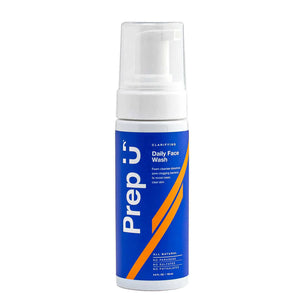
Dry skin shows up as tightness after washing, a dull or flaky appearance at the nose or forehead, and small, tight pores. Sensitive skin tends to react to new products with redness, stinging, or irritation. Both types need cleansers built around hydrating, plant-based ingredients — aloe vera, coconut oil, jojoba oil, or olive oil — that clean without disrupting the skin's natural moisture barrier. For these skin types, avoid anything with salicylic acid, glycolic acid, sulfates, or alcohol, which strip moisture from already-thirsty skin. The Daily Foaming Face Wash is formulated with a plant oil base that cleanses gently without disrupting moisture balance. Once in the morning and once at night is sufficient; washing more frequently than that typically backfires with dry or sensitive skin.
Best Face Wash for Combination Teen Skin
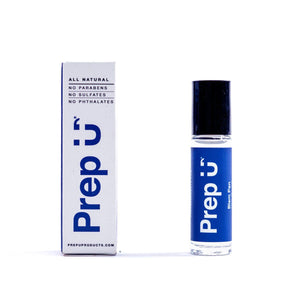
Combination skin is oily in the T-zone — forehead, nose, and chin — and normal to dry on the cheeks and around the eyes. It's the trickiest type to manage because what helps the oily areas can irritate the drier ones. The practical solution is a gentle daily cleanser for the whole face, with targeted treatment only for problem areas. The Daily Foaming Face Wash works well for combination skin because it's gentle enough not to over-dry the cheeks while still managing the T-zone's oiliness. For individual blemishes that appear in the oily zone, the Blem Pen Serum lets you apply treatment precisely to the spot without spreading a strong formula all over the face.
What Ingredients to Avoid in Teen Face Wash
Label-reading is a skill worth developing, especially for teen skincare. Ingredients to avoid include parabens (preservatives that can cause irritation), phthalates (often hidden under the word "fragrance"), synthetic fragrances (a leading cause of contact dermatitis in teens), sulfates (sodium lauryl sulfate, sodium laureth sulfate — both strip the skin's protective moisture barrier), and propylene glycol (a penetration enhancer that can irritate sensitive skin). For teen boys specifically, products marketed to adults often contain concentrations of active ingredients — retinol, AHA acids — that are too strong for still-developing skin. Simpler is better at this age: look for a short ingredient list built on plant-based cleansers, no artificial dyes, and no synthetic perfumes.
How Often Should a Teen Wash His Face?
Twice daily — once in the morning and once before bed — is the right frequency for most teen skin types, including oily skin. The morning wash removes oil and any residue that accumulated overnight; the evening wash removes the day's buildup of dirt, oil, and environmental debris. If your son plays sports, a rinse after practice (even with water only, if a full wash isn't practical) helps prevent sweat from sitting in pores. Washing more than twice a day is counterproductive for most skin types — it prompts the skin to produce more oil to compensate for what's been stripped. The goal is a consistent, manageable routine, not an intensive one. The routine that gets used every day beats the perfect routine that gets skipped.
Last reviewed June 2026 by the Prep U team.
*Information on this site is intended for educational and informational purposes only. Any information on this site is not intended to make claims to any unique individual and/or experience.
For more, see our guides to the best face wash for teenage guys with acne and face care for teen boys.